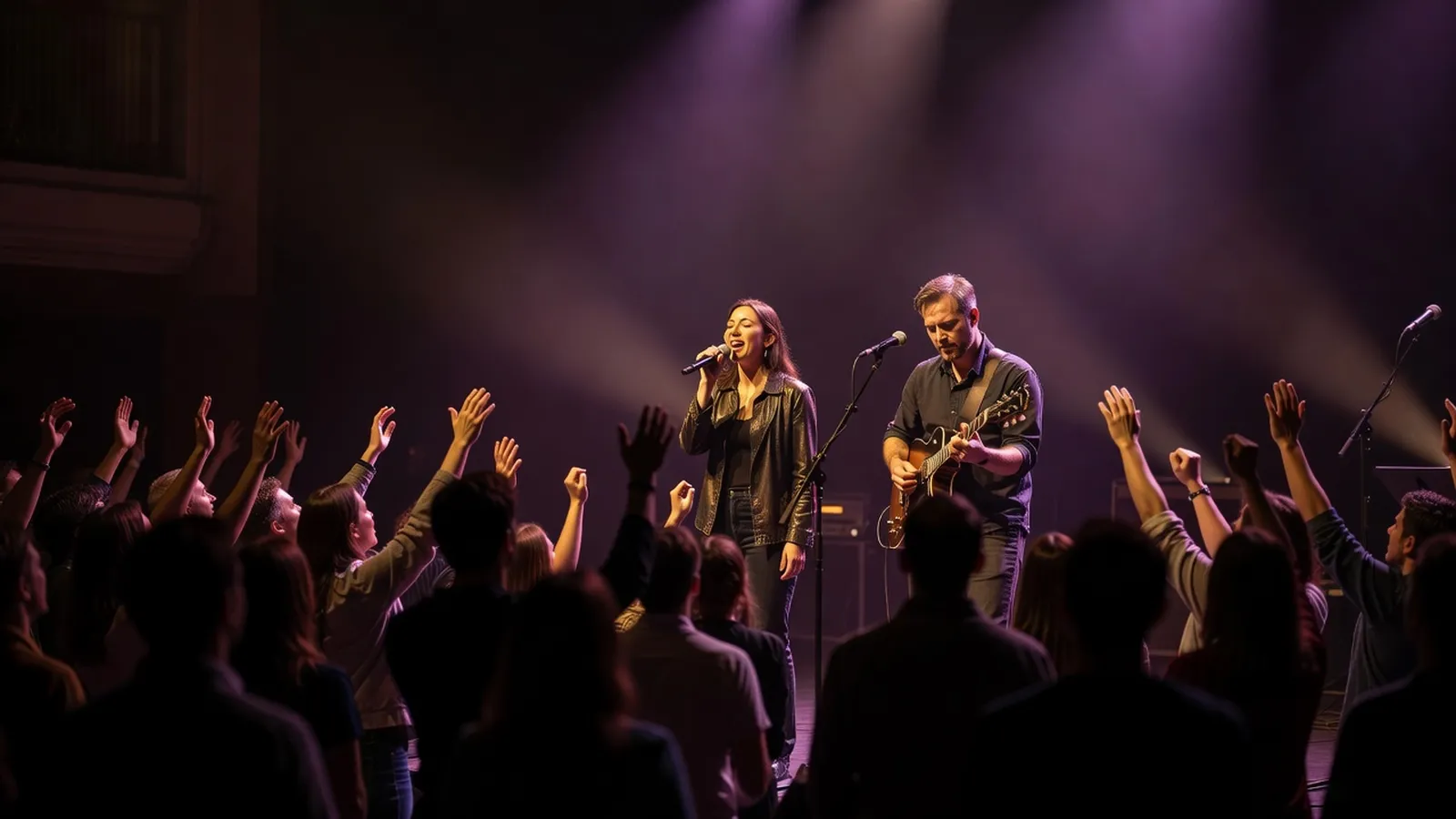
Toronto has live music at every scale: a singer-songwriter in the corner of a small bar, a jazz trio in a room above a restaurant, a mid-size hall with a standing floor, a theatre with fixed seats, a stadium on a summer evening, a festival stage in a park. The question is rarely where to find music, but which room suits the evening you have in mind. This guide explains the types of venue, how styles and atmospheres differ from room to room, and how to prepare so that the night is about the music.
It is a guide to types of places, not a directory. We do not rank venues, list this week's programme or sell tickets, because programmes change daily and an independent guide should not take sides. The rooms' own channels remain the source for dates and tickets.
Start with the size of the room
The size of a room shapes almost everything: the sound, the distance from the stage, the crowd, the price and the way an evening feels. Thinking in four sizes is useful.
| Size | What it feels like | Good for | Points to check |
|---|---|---|---|
| Small room (a bar with a corner stage) | Close to the artists, often standing, conversational | Discovering new acts, jazz, folk, blues, open stages | Door time, whether there is a cover charge, seating |
| Mid-size hall | A real stage, a standing floor, a bar at the back | Touring bands, album launches, club nights | Tickets in advance, age rule, coat check |
| Theatre or seated hall | Fixed seats, good sightlines, focused listening | Concerts that reward attention, acoustic and classical programmes | Seat map, accessibility, start time |
| Large hall, stadium or festival ground | A crowd of thousands, big screens, a day or night out | Major acts, outdoor festivals | Transit plans, bag rules, weather, permits |
None of these is better than another. A small room gives you proximity; a theatre gives you clarity; a big hall gives you an event; a festival gives you a day. What matters is that the size matches what you want.
Styles and atmospheres
Toronto's music scene is varied, and different rooms tend to attract different crowds. We do not tie styles to named venues, since lineups change, but a few patterns hold.
Jazz and blues are usually heard in small rooms and restaurant venues, where the evening is built around listening and conversation, often with sets that begin at a stated time. Folk, singer-songwriter and roots music also suit small rooms and café-style spaces. Rock, indie and punk fill mid-size halls and bar stages with a standing floor, where the crowd is part of the show. Electronic and dance music live in clubs and late rooms, where the pace is set by the DJ and the night runs late. Classical and chamber music is performed in concert halls, churches and heritage rooms, with seated audiences and a more formal etiquette. World and community music often appears at festivals, cultural centres and neighbourhood events.
Atmosphere also depends on the evening. A weeknight set can be quiet and intimate; a Saturday in the same room can be packed and loud. Reading how a venue describes itself on its own channels, and looking at recent photos and videos it shares, helps you pick the version of the room you want.
How a night is put together
It helps to know how a live night works from the inside, because it explains the timings you see on a ticket. Doors open at a stated time, when the audience can come in. An opening act often plays first, then a changeover while the crew resets the stage, then the headliner. The programme the venue announces gives door time and sometimes the start time of the first set; the headliner usually plays later than the door time, sometimes by several hours. If you want to see a specific act, check when it is expected on stage.
Behind the scenes, a stage manager, sound engineers and a venue crew coordinate load-in, a sound check, the changeover between acts and the end of the night. You rarely see this work, but its quality decides whether a set starts on time and sounds good. If you are organizing a night that includes a band, our guide to private events and parties explains what to ask the venue about sound, load-in and end times.
Preparing for a concert night
A little preparation improves a night more than almost anything else.
- Decide what you are there for. The act, the room or the evening with friends. This shapes whether you arrive early for the opening act or later for the headliner.
- Check the venue's own channels. Door time, age rule, whether the show is seated or standing, bag policy and ticket links are all published by the venue.
- Buy tickets from the venue or its named ticket partner. For popular shows, buy in advance. Be cautious about resale from unofficial sources.
- Bring valid photo identification if the event serves alcohol or has an age rule. The legal age to buy, have or drink alcohol in Ontario is 19.
- Think about your ears. Loud shows can leave your ears ringing; earplugs designed for concerts reduce the volume while keeping the music clear.
- Dress for the room and for the street. Small rooms can be warm, and winter nights outside are cold; a coat check helps.
- Plan the way home before you go. The TTC runs an overnight network, but frequencies fall late at night.
Age rules and alcohol
Many live-music rooms serve alcohol, and the legal age to buy, have or drink it in Ontario is 19. As a result, some shows are 19 and over, and others are all-ages, with rules that the venue sets for each event. If you are bringing a younger person, read the event page and, if it is unclear, ask the venue. Staff may ask for photo identification from anyone who looks younger than they are, so bring a valid piece, not a photocopy.
Accessibility
Ontario's accessibility law requires organizations that serve the public to take steps to make services available to people with disabilities. For live music, the practical questions are step-free entrances, accessible washrooms, seating or viewing platforms, and how the venue handles guests who need assistance. Older rooms vary, and the best approach is to contact the venue before you buy tickets. A short message describing what you need usually gets a clear answer, and many venues are glad to help.
Noise, neighbours and the city
Live music is loud by nature, and Toronto manages sound through measured limits rather than a general ban at a given hour. A venue that wants to exceed the limits for a special event needs an exemption, and an outdoor event in a park or public space needs a permit from the City. For a guest, the practical effect is that outdoor shows and festivals run to a published schedule and that sound in some neighbourhoods is controlled with care. Leaving quietly when you go home is a courtesy to residents.
Festivals and outdoor shows
In warm months, Toronto's parks, squares and waterfront host festivals and outdoor shows. We do not list dates, because they change year to year and we only publish what we can verify at the time. For any festival, the official site of the event is the place to check dates, line-up, ticketing and the rules on bags, cameras and re-entry. Plan more carefully than for an indoor show: transit gets crowded, weather matters and queues are long. Bring water, sun protection or rain gear according to the day, and meet your group at an agreed place in case phones fail.
Three evenings, three room sizes
It can help to picture the same evening in different rooms.
The small room. You arrive when the doors open or shortly after, find a spot near the side of the room and order a drink. The first act plays to a room that is still filling, and conversation carries on quietly between songs. Because the artists are close, you hear small details: a breath before a chorus, a string being retuned. The evening is short and the cost is usually modest compared with a big hall. Leaving early is easy, and so is staying for one more set.
The mid-size hall. You buy tickets in advance, arrive with a rough idea of when the headliner will play and spend the opening hour at the bar or near the stage. When the headliner begins, the room is full and the sound is loud, so earplugs are worth bringing. The crowd is part of the show: people sing along, move and cheer. Plan your exit, since a full room empties all at once and transit is busy for a short time afterward.
The seated hall. You choose your seat when you buy, arrive a little before the start and settle in. The mood is attentive, applause comes at the end of pieces and phones stay in pockets. The advantage is clear sound and a good view from every seat; the trade-off is less freedom to move or to talk. A seated hall suits programmes that reward close listening and guests who want to sit for the whole evening.
Listening etiquette
A few shared habits help everyone enjoy the night. Keep conversation low during the music, especially in small rooms where the artist can hear you. Hold your phone low or keep it away, since screens block the view of the people behind you, and some artists ask for no recording at all. Applaud at the end of a piece in a classical or jazz setting, and follow the room's lead when you are unsure. Respect personal space in a standing crowd, and help anyone who looks unwell. When the night ends, leave the venue and the street the way you found them.
Going with others
A live night is easier to enjoy when the group agrees on a few things in advance. Decide where to meet and what to do if someone gets separated, since phones can be hard to use in a loud room. Agree on how you are getting home and who will leave when. If one person in the group uses a mobility aid or has a hearing need, choose a room and a spot in it that works for them. For a first live night with a friend or partner, a small room with an act you have both heard of is a low-pressure start. For a birthday or a group outing, a seated hall or a venue with a table section makes it easier to stay together.
Seasons and the calendar
Live music changes with the seasons. Summer brings outdoor shows, festivals and patios with music, and the programme shifts toward open-air stages. Autumn and winter bring the indoor season: touring bands, theatre programmes and holiday concerts, with coats, cold queues and shorter evenings on the streets. Weeknights are generally quieter and kinder to your budget; weekend nights are busier. Whatever the season, a quick look at the venue's channels on the day tells you what is on and when the doors open.
Discovering music you do not know yet
One of the pleasures of a big city is stumbling on an act you had never heard of. A few habits help. Go to a small room on a weeknight with no particular plan and stay for the opening act. Follow the social channels of two or three venues whose atmosphere you like, since their programme is a steady source of ideas. Ask the bar staff or the person next to you what they have enjoyed lately. Listen to a few recordings of an artist before you buy a ticket, and look at how they describe their own shows. Take a friend who likes a different style: the crossover is often where the best evenings come from.
Local and community radio, neighbourhood newsletters and the notice boards of cultural centres are other places where programmes appear. Because they change often, treat them as a starting point and confirm the details on the venue's own channel before you go.
Practical details that are easy to forget
Charge your phone before you leave, since tickets are often on the screen. Check whether the venue takes cards or cash at the bar and at the door. Carry only what you need; large bags are not allowed in some halls and festivals, and a small coat check is cheaper than a lost jacket. Eat before or during the evening, since a long standing night is easier with a meal behind you. Keep water within reach and pace yourself. If the night is cold, leave time at the end to warm up before the journey home. And keep a note of the artists you enjoyed, so that next time you can find them again.
A word on tickets and queues
Tickets are the most common source of trouble on a live night. Buy only from the venue's own ticket page or from the ticket partner it names, and be careful with offers from strangers on social media, since a ticket that cannot be checked at the door ends the evening before it starts. Keep the confirmation email and a screenshot of the ticket in case the signal is weak at the entrance. Arrive a little before the stated door time if you want a spot near the stage, and expect a short queue for the coat check and the bar. If an event is cancelled or moved, the venue's channels are where the news appears first, and refunds follow the terms of the ticket seller.
Supporting the artists
Live music depends on a chain of people: performers, crew, venue staff and promoters. A few habits help it thrive. Buy tickets from official sources so that the money reaches the people who make the evening. Arrive early enough to hear the opening act, who are often local artists building an audience. Buy a record or a T-shirt at the merchandise table, which usually supports artists directly. Follow the artists and venues you like, and tell friends. In Canada, music rights organizations such as SOCAN represent songwriters and publishers, and provincial agencies such as Ontario Creates support the creative sector; both explain how the industry works if you want to learn more.
Making a night of it
Live music pairs naturally with an evening out. Many people have dinner nearby before a show, or move on to a bar afterward. Our guide to Toronto after dark describes the neighbourhoods and the types of venues, and it can help you choose where to eat and where to go afterward. For a celebration that includes a band, such as a wedding reception, see weddings and celebrations in Canada. More topics are on the blog.
About this guide
King West Journal is an independent editorial site. It is not a venue, a promoter or a ticket seller. If you notice an error, a venue that has changed or a topic we should cover, write to us through the contact form; you can read about our approach on the about page.
Frequently asked questions
How do I find out what is playing in Toronto this week?
Use the venues' own websites and social channels, which publish their programme, door times and ticket links. Destination Toronto also publishes visitor information. Programmes change, so check the day before you go.
Can I go to a concert if I am under 19?
Some events are all-ages and some are 19 and over, because the legal age to buy, have or drink alcohol in Ontario is 19. The venue's page for each event states its age rule, so check before you buy tickets.
Should I buy tickets in advance?
For larger rooms and popular acts, yes, from the venue's own ticket page. For small rooms there is often a door sale. Buy from the venue or its named ticket partner, and be wary of anyone reselling outside official channels.
Is live music accessible if I use a wheelchair?
Many venues have accessible entrances and washrooms, but older rooms vary. Contact the venue ahead to ask about step-free access, seating and viewing areas.
Is this guide a list of recommended venues?
No. King West Journal is independent. It describes types of rooms and ways to prepare, and it does not rank, sell tickets or take bookings for any venue.
Sources
Verified on
- Destination Toronto, Official visitor information for Toronto, Destination Toronto, 2026.
- Toronto Transit Commission, TTC routes, fares and service information, TTC, 2026.
- Toronto Transit Commission, Blue Night Network, TTC, 2026.
- Alcohol and Gaming Commission of Ontario, Legal drinking age and photo identification, AGCO, 2026.
- City of Toronto, Noise bylaw and enforcement, City of Toronto, 2026.
- Gouvernement de l'Ontario, Accessibility in Ontario, Government of Ontario, 2026.
- Gouvernement de l'Ontario, Accessibility rules for businesses and non-profits, Government of Ontario, 2026.
- City of Toronto, Special events permit booking, City of Toronto, 2026.
- Ontario Creates, Ontario Creates, the provincial agency for creative industries, Ontario Creates, 2026.
- SOCAN, SOCAN, the Canadian music rights organization, SOCAN, 2026.