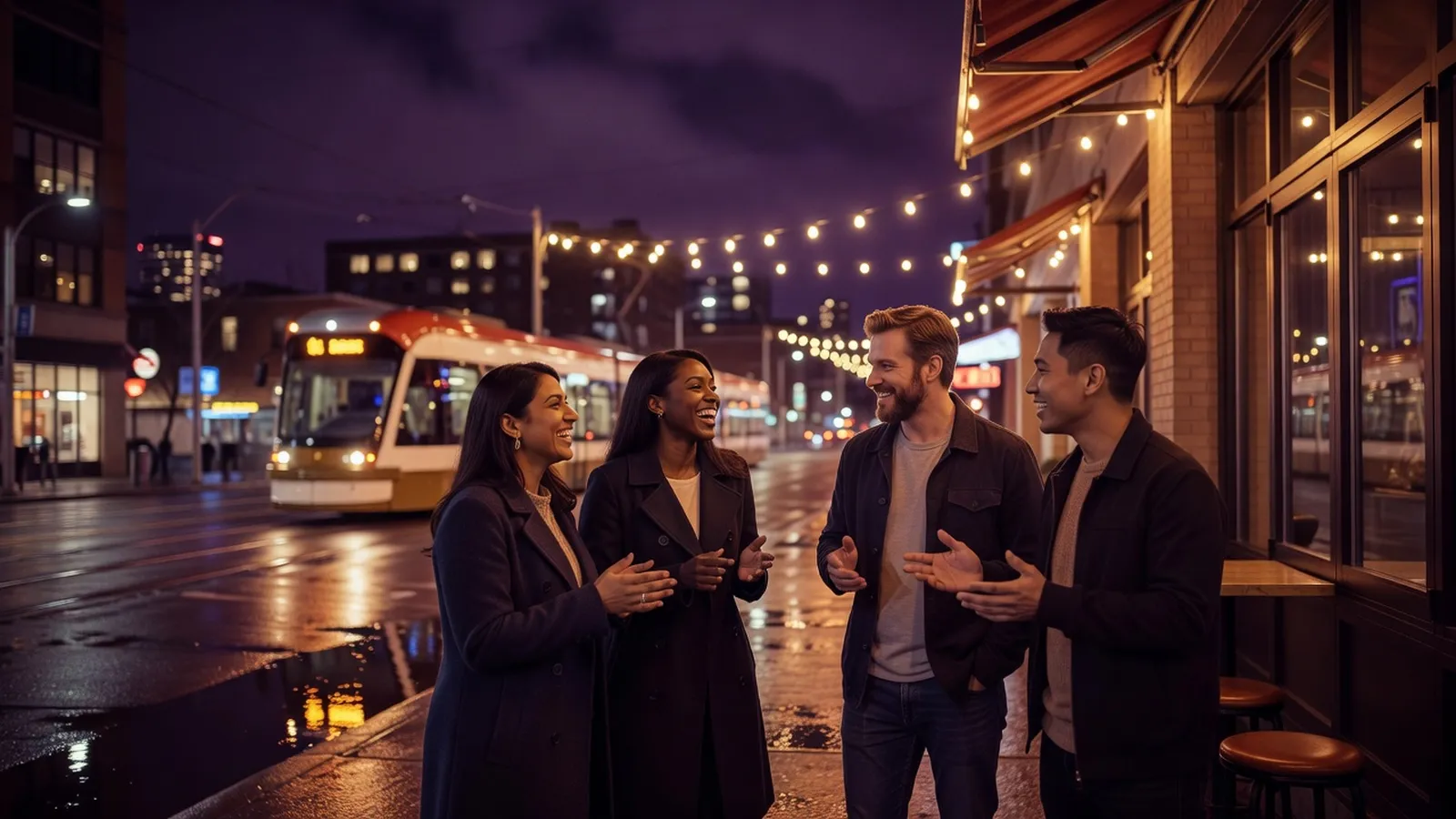
Toronto has no single nightlife district. It has a dozen, spread along streetcar lines and subway stops, and each one has its own pace: a late dinner and a cocktail on King West, a walk between small rooms on Ossington, a patio in Kensington Market, a quiet drink in Yorkville. This guide explains how those neighbourhoods differ, what kinds of evenings they suit, which rules to know before you go and how to plan a night so that the way home does not become the hard part.
It is a map, not a ranking. We do not recommend specific bars or sell tickets or tables, and we avoid describing any venue we have not checked on its own channels. What we can offer is a way of choosing, built around the evening you actually want to have.
How to read Toronto at night
The city grew around a grid. Streets run east–west (King, Queen, Dundas, College, Bloor) and north–south (Spadina, Bathurst, Ossington, Yonge), and nightlife clusters where those lines cross. Two habits help when you read the map.
First, think in terms of corridors rather than districts. King Street West is a corridor of restaurants, hotel bars and larger rooms that runs from the downtown core toward Liberty Village. Queen Street West is a corridor of smaller bars, record shops and late-night food. Ossington is a short, dense strip. Walking a corridor, you can change venue three times in an evening without ever needing a car.
Second, think in terms of the kind of night. A birthday dinner, a first date, a reunion with old friends, a music night, a late night after a show: each calls for a different pace, noise level and budget. The sections below group neighbourhoods by the kind of night they handle best, and the table at the end of this section summarises the comparison.
| Kind of night | Neighbourhoods to start with | What to expect |
|---|---|---|
| Dressed-up dinner and a late bar | King West, Entertainment District, Yorkville | Larger rooms, hotel bars, reservations helpful on weekends |
| Walking between small rooms | Queen West, Ossington, Dundas West | Narrow bars, casual dress, many options within a few blocks |
| Informal and lively | Kensington Market, College Street, Little Italy | Patios in season, mixed ages, easy to change plans |
| Live music | Queen West, Dundas, College, Danforth | See the live music in Toronto section |
| Quiet and local | Leslieville, Roncesvalles, the Junction | Neighbourhood restaurants and bars, earlier evenings |
| Pride and community nights | Church–Wellesley | Established community venues, events throughout the year |
King West and the Entertainment District
King Street West between roughly University Avenue and Bathurst is the district most people picture when they say "downtown Toronto nightlife". It combines theatres, restaurants, hotel bars and a number of larger rooms, and it is close to the main hotels, which means a lot of visitors pass through. On weekends the area gets busy early, and lines at popular doors are part of the experience for some groups and a reason to avoid it for others.
The strengths of King West are variety and convenience: you can have dinner, see a show and finish with a late drink without leaving a few blocks. The streetcar runs along King, and the subway at St Andrew and Osgoode is within walking distance. The trade-offs are crowds, higher menu prices than in many other neighbourhoods and an atmosphere that can lean toward the polished and the loud. For a birthday dinner or an evening you want to feel like an occasion, it is a natural first choice.
If you are planning a private evening with a group, see our guide to private events and parties, which explains what to check before you commit to a space.
Queen West, Ossington and Dundas West
Further west, the streets get narrower and the rooms get smaller. Queen West is a long strip of bars, independent shops and food counters that stay open late. Ossington Avenue, just north of Queen, is shorter, with a dense cluster of cocktail bars and restaurants on a few blocks. Dundas West, from Ossington to Roncesvalles, has a similar feel with more room to breathe.
These neighbourhoods suit people who like to wander. A typical night might begin with a drink in a small room, continue with food from a counter and end somewhere with music. Dress codes are generally relaxed, and the crowd is mixed in age. The downside is that popular rooms are small, so a group of six or more may find it hard to stay together, and weekend nights can have a wait at the door.
Kensington Market, College Street and Little Italy
Kensington Market has a character of its own: old Victorian houses turned into shops, cafés and bars, a lot of outdoor seating in warm months and a more informal crowd. It is easier to change plans here than in other districts, because everything is within a few streets. College Street, between Bathurst and Ossington and sometimes called Little Italy, has a long-standing mix of restaurants, patios and bars that feel neighbourhood-sized rather than destination-sized.
These areas work well for casual evenings with friends, for groups that do not want to commit to one place and for people who prefer to eat well and talk rather than dance. In winter, the patios close and the evening moves indoors, so the options narrow.
Yorkville and the Annex
North of Bloor, Yorkville is the more polished end of the city: hotel lounges, wine bars and restaurants in converted houses. The mood is quieter than King West, the average age is a little higher and the evening tends to end earlier. The Annex, between Bloor and Dupont and close to the university, has a more studious character: pubs and bars that serve students, staff and residents, with an unhurried atmosphere.
Both are good for conversation-led evenings: a long dinner, a glass of wine afterward, a walk home. They are less suited to a night that is meant to be loud and late.
Church–Wellesley, the Danforth and the east end
The Church–Wellesley neighbourhood is the centre of Toronto's LGBTQ+ community life, with bars, restaurants and community spaces that operate throughout the year and a large Pride programme in the summer. It is welcoming to visitors and residents of all backgrounds who are respectful of the space.
Further east, Leslieville and the Danforth have a neighbourhood feel: restaurants with loyal local clientele, a small number of bars and earlier evenings. Greektown on the Danforth is known for its restaurants and its summer street life. For a night out that feels like part of a real neighbourhood rather than a destination, the east end is worth the subway ride.
Types of venues and what to expect
Names change fast in a city this size, so it helps to think in types.
- Restaurant bars and hotel bars. Seated, quieter, higher prices; good for starting an evening or for conversation. Reservations are common.
- Cocktail bars. Small rooms with a printed menu, often standing room and a few tables; the evening is paced by the drinks.
- Pubs and taverns. Casual, affordable relative to the city, sometimes with live music or trivia; you can usually walk in.
- Live-music rooms. From small bars with a corner stage to mid-size halls; the programme is set by the venue and published on its own channels. See our guide to live music in Toronto.
- Nightclubs and late rooms. Dance floors, later hours, often a line at the door and sometimes a dress expectation. Opening nights are set by each venue.
- Patios and rooftops. Seasonal and weather-dependent; check the venue's channels on the day.
Every venue sets its own door policy, dress expectations and hours. We do not list them, because they change; the safest source is the venue's own website or social channels.
The rules worth knowing
A few rules apply whichever neighbourhood you choose.
Age. The legal age to buy, have or drink alcohol in Ontario is 19, and a venue may ask for photo identification from anyone who appears younger. Bring a valid piece of ID; a photocopy or a photograph on a phone is often refused. The details are on the AGCO's page about the legal drinking age.
Licensed premises. Bars and restaurants that serve alcohol operate under a licence issued under Ontario's liquor legislation, and the licence sets the conditions the venue must follow, including maximum capacity. As a guest, the practical consequences are straightforward: a venue can refuse entry when it is at capacity, and it can refuse service to someone who appears intoxicated.
Noise. The City of Toronto regulates amplified sound through measured limits rather than a blanket ban at a given hour, and a venue that wants to exceed them needs an exemption. This is mostly the venue's concern, not the guest's, but it explains why some outdoor patios wind down earlier than you might expect.
Accessibility. Ontario's accessibility law applies to organizations that serve the public, and many venues have step-free entrances and accessible washrooms. Older buildings are not always easy, so if you or a guest uses a mobility aid, ask the venue in advance.
Getting there and getting home
Toronto is one of the easier North American cities for going out without a car, but it rewards planning.
The streetcars on King and Queen are slow but frequent in the evening, and they connect most of the neighbourhoods above. The subway is faster over distance, and its late-evening frequency is lower than at rush hour. After the subway stops running, the TTC operates the Blue Night Network, a set of overnight routes that mostly follow the daytime corridors; the TTC site shows routes and times. Taxis and ride-hailing are always an alternative, and prices rise when events end at the same time, so leaving a little before or after the rush helps.
Three habits make the difference. Check the TTC's service information before you leave, not when you are tired. Agree on the way home with your group before the evening starts, especially if some people are staying later. And if you have been drinking, leave the car at home: it is the simplest decision of the night.
Planning an evening, step by step
Whatever neighbourhood you pick, a simple sequence works.
- Pick the kind of night. Dinner and a late bar, a walk between small rooms, a concert, a casual night with friends. The kind of night determines the neighbourhood far more than the other way around.
- Choose a neighbourhood and a backup. Rooms fill up. Having a second option within a short walk avoids a long search at the door.
- Check the venue's own channels. Hours, programme, dress expectations and reservations are published by the venue. Do this the day of, not weeks before.
- Book only what needs booking. A dinner table on a Friday, yes; a bar on a Tuesday, usually not.
- Plan the way home. Decide with your group, and check the TTC service information.
- Keep a margin. Allow time for lines, a change of plan and a slower walk than the map suggests.
If you are organizing a larger group, a birthday or an event where you take responsibility for the room and the drinks, a different set of questions applies: who holds the permit, how many people the space can hold, what insurance the venue asks for. Our section on private events and parties explains those questions.
Seasons and weather
Toronto's nights change with the seasons more than many visitors expect. From late spring to early autumn, patios and rooftops open, streets are busy until late and walking between venues is part of the pleasure. In winter, the evening moves indoors and the city can feel quieter after dinner; coat checks, cold waits at the door and slippery pavement are real factors. A winter night often works best with fewer, longer stops than a summer walk across five venues.
Big events change the picture. Festival weekends, sports nights and holidays fill the bars and the streets around them and can make transit crowded. If you are going out on one of these evenings, plan to arrive earlier and leave with a margin. New Year's Eve is a special case, with its own planning questions about permits, hours and where to celebrate.
Going out safely and respectfully
Most evenings in Toronto are uneventful, and a few simple habits keep them that way. Keep your phone charged and your group informed, and share where you are going. Drink water between drinks. Watch your drink and do not accept one you did not see being poured. If a friend looks unwell, stay with them rather than sending them home alone. If you need help, venue staff are the first people to ask, and emergency services are reachable by phone in the usual way.
Respect matters as much as safety. Many neighbourhoods are residential above the bars, and people live above the patios. Keep voices down on the street when you leave, and follow the rules of the venue and the instructions of staff. A good night out leaves the street the way you found it.
Costs, budgets and how to plan them
We do not publish prices, because they change and because the same night can cost very different amounts depending on the neighbourhood and the table. We can, however, point out what drives the cost. The largest factor is the type of venue: seated restaurants and hotel bars cost more than pubs and counters. The second is the day of the week: weekends are busier and pricier than weeknights. The third is how many stops you make: a night with three short stops usually costs more than one long dinner.
A workable approach is to decide the evening's spend before you leave and pick the neighbourhood that matches it. A budget-conscious group can combine a counter-service meal with an evening on a patio or a pub; a group with more to spend can book a dinner and finish at a bar. Check the venue's own menu for current prices, and add tax and tip to your estimate.
When you want something bigger than a night out
Sometimes an evening out turns into something larger: a birthday you are hosting, a celebration for a group, a wedding with guests from abroad. Those occasions bring paperwork and responsibilities that a casual night does not.
For a private party or a celebration with alcohol, start with our guide to private events and parties, which explains the permit questions and the space checklist. For a wedding or a celebration tied to a marriage in Ontario, see weddings and celebrations in Canada. For live music specifically, our section on live music in Toronto describes the types of rooms and how to prepare.
About this guide
King West Journal is an independent editorial site. It is not a venue, an organizer or a ticket seller, and it has no link with the former King West nightclub. You can read more on the about page, and you can write to us through the contact form if you spot an error or want to suggest a topic. The rest of our articles are on the blog.
Frequently asked questions
What is the legal age to go out for a drink in Toronto?
In Ontario you must be 19 to buy, have or consume alcohol. Venues can ask for photo identification, so bring a valid piece of ID even if you are well past 19.
Which Toronto neighbourhood is best for a first night out?
It depends on the evening you want. King West and the Entertainment District suit a dressed-up night with dinner and a late bar; Queen West and Ossington suit smaller rooms and a walking evening; Kensington Market and College Street suit a casual, informal night.
Is it easy to get home late at night without a car?
Usually yes, if you plan it. The TTC runs an overnight Blue Night Network, and taxis and ride-hailing are available, but frequencies drop after midnight, so check the TTC site before you leave.
Do I need to book a table?
Many bars take walk-ins, while restaurants and popular rooms on weekends may fill up. Check the venue's own website or call, and arrive early if you are a group of more than four.
Is this guide a list of recommended bars?
No. King West Journal is an independent guide. It describes neighbourhoods and ways of going out, and it does not rank, sell or take bookings for any venue.
Sources
Verified on
- Alcohol and Gaming Commission of Ontario, Legal drinking age and photo identification, AGCO, 2026.
- Gouvernement de l'Ontario, Liquor Licence and Control Act, 2019, Lois de l'Ontario, 2019.
- Ville de Toronto, Noise bylaw and enforcement, City of Toronto, 2026.
- Toronto Transit Commission, TTC routes, fares and service information, TTC, 2026.
- Toronto Transit Commission, Blue Night Network, TTC, 2026.
- Destination Toronto, Official visitor information for Toronto, Destination Toronto, 2026.
- Gouvernement de l'Ontario, Accessibility in Ontario, Government of Ontario, 2026.
- Alcohol and Gaming Commission of Ontario, Special occasion permits, AGCO, 2026.
- Ville de Toronto, Special event permits in parks and public spaces, City of Toronto, 2026.