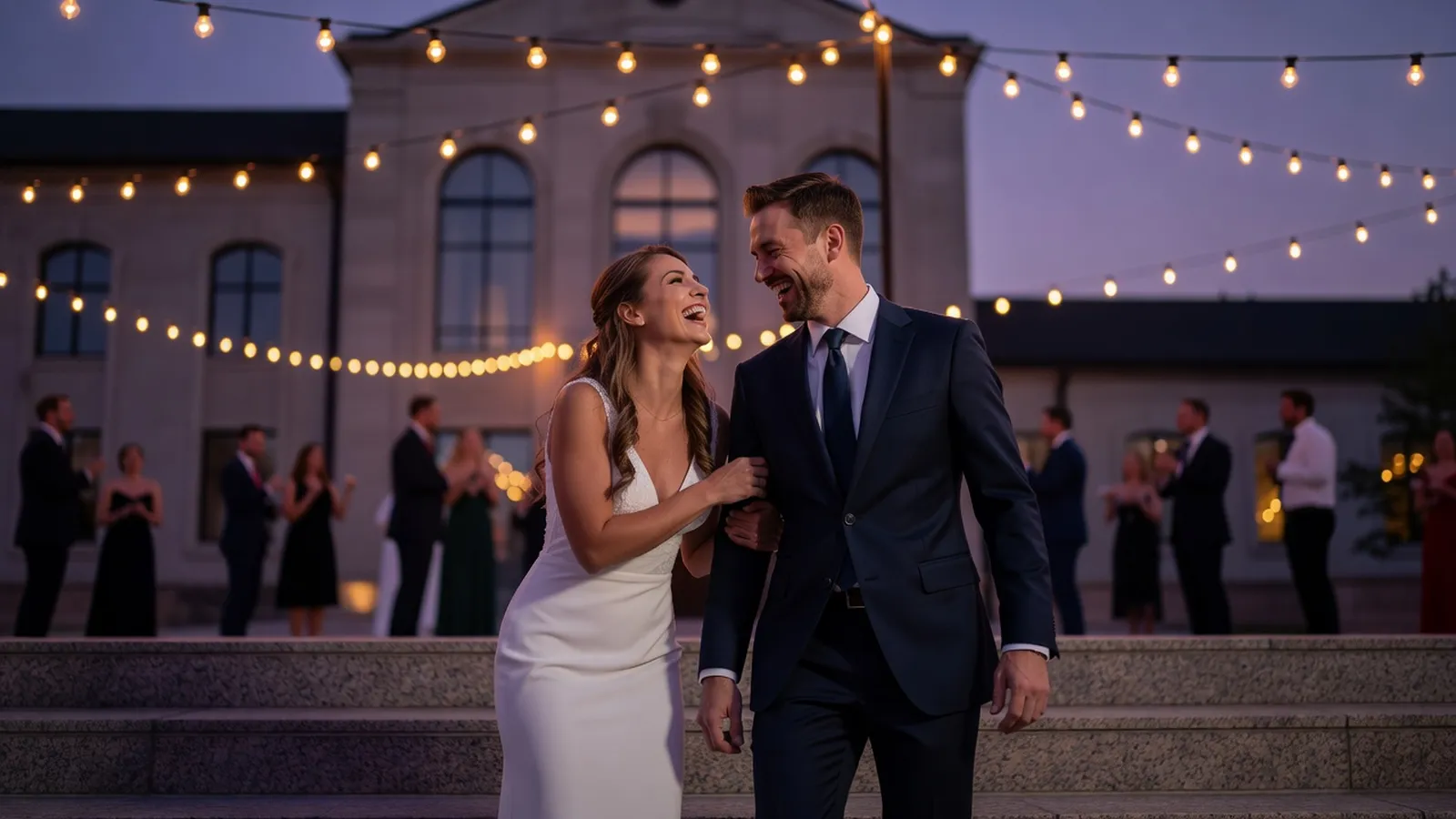
A wedding in Canada has two layers that are easy to confuse. The first is legal: a licence, an authorized officiant, witnesses, a signed record that the province registers. The second is the celebration: a meal, music, family and friends, in a place that suits the couple. This guide covers both, with the weight on the legal layer, because that is where mistakes cost the most and where couples with guests or a spouse from abroad have the most questions.
We are an independent editorial site. We are not a wedding planner, an officiant or a lawyer, and we do not sell services or take bookings. Everything legal below comes from official sources read on the date shown. For your own situation, check with the organization cited or with a qualified adviser.
Two layers: the marriage and the celebration
A marriage in Ontario is a legal act performed under the Marriage Act and recorded by the province. A celebration is a social event. They can happen on the same day in the same place, or years apart in different countries. Many couples marry in a short civil ceremony and hold a larger party later, especially when family has to travel. Seeing the two separately removes pressure: the legal ceremony has a short list of requirements and can be small, and the celebration can be as large and as flexible as you want.
If you plan the celebration yourself, the checklist in our guide to private events and parties covers the venue, alcohol permit and contract questions that apply to a reception just as they do to any private party.
The legal steps in Ontario
The sequence is short, and each step depends on the one before.
- Get a marriage licence. You apply online through ServiceOntario and pick up the licence in person at a participating municipal office, or you apply in person at a city hall, town hall or municipal office that issues licences. The licence is valid for 3 months from the date it was issued, so the ceremony has to happen inside that window.
- Gather the documents. Both people need acceptable identity documents. Documents not in English or French need a professional translation. If either of you was married before, additional proof that the previous marriage ended is required.
- Choose a registered or authorized officiant. Only a registered religious officiant or a civil officiant can perform the ceremony. Civil officiants include judges, justices of the peace and authorized municipal clerks.
- Hold the ceremony in front of at least two witnesses. The couple, the witnesses and the officiant sign the licence immediately afterward.
- The officiant sends the signed licence to ServiceOntario, which registers the marriage. You can then obtain a marriage certificate from the province.
At each step, rely on the Ontario government pages cited at the end of this guide, since forms and processes are updated. A few details worth knowing in advance are given below.
Age and consent
Both people must be at least 16 years old on the date the marriage licence is issued. If one or both of you is under 18, written consent from your parents or legal guardians, or a court order, is required. Each person must be able to give free and willing consent. Where either person is under 18, check the Ontario page before you plan the date.
The licence and its fee
The licence is issued by an authorized municipal office. The provincial licence fee is $75; the municipality may charge additional fees, so the total varies from one office to another, and fee exemptions exist in specific cases described on the Ontario page. Always check the current figure with the office that will issue your licence.
Documents in other languages
The documents you present must be in English or French. A document in another language needs a professional translation accompanied by the translator's written declaration. If you are marrying in Ontario with documents from abroad, start this step early: translations and the validation of foreign divorce documents can take time.
Previously married
If either of you has been married before, you will be asked for proof that the earlier marriage ended. A Canadian divorce requires the final divorce document; a divorce granted abroad has its own validation process, which can take several weeks. Ask the office that issues your licence which documents they accept.
Choosing an officiant and a ceremony
The law distinguishes between religious and civil officiants, and your choice shapes the ceremony.
A religious ceremony is performed by an officiant registered under the Marriage Act, in a place of worship or elsewhere, following the traditions of the faith. The officiant takes care of the legal formalities along with the religious rite, but you still need the licence in advance.
A civil ceremony is non-religious. It can be performed by a judge, a justice of the peace or an authorized municipal clerk, and many municipalities offer civil ceremonies in their city hall or another civic space. Not every municipal employee is authorized, so ask the office.
Either way, the officiant should confirm in advance what they need from you, how long the ceremony takes and whether you can write your own vows. Many couples add a personal moment (a reading, a song, a family tradition) around the legal minimum, and the officiant can usually accommodate this if you ask early.
Where to hold the ceremony and the celebration
Ontario offers many kinds of spaces, and the right choice depends on the guest count, the season and the atmosphere you want.
| Type of place | Fits | Points to check |
|---|---|---|
| City hall or civic space | Short civil ceremony, small group | Availability, hours, number of guests |
| Place of worship | Religious ceremony | Rules of the faith community, registered officiant |
| Garden, park or heritage site | Outdoor ceremony | Permit, weather plan, accessibility, sound limits |
| Reception hall or banquet venue | Ceremony and reception together | Capacity, catering rules, alcohol service |
| Restaurant private room | Small celebration, dinner | Minimum spend, hours |
| Hotel | Guests from out of town | Room blocks, set menus, cancellation terms |
For any reception that includes alcohol, remember that the licence of a venue or the need for a special occasion permit follows the rules explained in our guide to private events and parties. For an outdoor ceremony in a park or public space in Toronto, the City requires a special event permit.
Seasons and weather
Ontario's seasons shape wedding planning. Late spring to early autumn is the busiest period for outdoor ceremonies and gardens, and popular dates and venues fill well in advance. Winter weddings can be simpler to book and have their own charm, with indoor ceremonies and cosy receptions, but travel in bad weather is harder for guests. Whatever the season, have a weather plan and ask each venue what it offers if the day does not go as expected.
Guests from abroad
Many couples marrying in Ontario have guests who travel from other countries, and a few points keep their trip simple.
Entry to Canada. Whether a guest needs a visa or an electronic travel authorization depends on their nationality and travel documents, and the rules are set by Immigration, Refugees and Citizenship Canada (IRCC). Tell guests early to check the IRCC pages for their situation, and give them the dates so they have time to apply. An invitation letter can help in some cases; the IRCC pages explain what is useful.
Languages. Ontario is mainly English-speaking, with a significant French-speaking community. If you want your ceremony to take place in more than one language, ask the officiant what is possible. The documents for the licence must be in English or French, even if the ceremony is held in another language.
Practical comfort. Out-of-town guests appreciate clear information about transport between the airport, hotel and venue, the weather at the time of year and anything about dietary needs. A simple page or message with the day's schedule, the addresses and a contact number makes a big difference.
If one of you is a foreign national
Canada allows non-residents and foreign nationals to marry here. The federal Civil Marriage Act provides that a marriage performed in Canada between non-residents is valid under Canadian law if it would be valid had the spouses been living in Canada, and that marriage between two persons of the same sex is legal throughout Canada. The practical consequence is that nationality or residence does not prevent you from getting a licence in Ontario, as long as you meet the requirements described above.
Marriage and immigration are separate. Getting married in Canada does not by itself give a foreign spouse immigration status, permanent residence or a right to remain in Canada. A Canadian citizen or permanent resident can sponsor a spouse for permanent residence, and the sponsorship is a separate application that IRCC must approve. A fiancé(e) is not an immigration category on its own. This guide does not give individual immigration advice; read the IRCC pages on spousal sponsorship, and consult a licensed adviser for your own case.
Our section on getting married in Canada with a foreign spouse goes into more detail on the documents involved. In the meantime, the safest plan is to start early with the licence office and the IRCC pages, and to keep every document in both its original and translated form.
Recognition abroad
After the ceremony, a marriage certificate issued by the province is the main document. Some countries require that a Canadian marriage certificate be authenticated or carry an apostille before it can be used there. Global Affairs Canada explains that Canada takes part in the Apostille Convention, and that for a country outside it the document may need authentication in Canada and then legalization by that country's embassy or consulate. Whether a marriage performed in Canada is recognized is decided by the law and the authorities of the country where recognition is sought, not by Canada.
If you will need the certificate abroad (for a spouse's visa, a name change or a registry), ask the authorities of that country, before the wedding, exactly which form of the document they require. Doing so early saves weeks later.
Planning the celebration
Once the legal pieces are in place, the celebration is yours to design. A few principles help.
- Start with the guest list and the season, not the venue. They set the size and the type of space.
- Book the venue and the officiant first, since they are the scarcest resources on popular dates.
- Plan the timeline backwards from the end of the evening, with time for photographs, speeches and the move from ceremony to reception.
- Ask every vendor for a written quote that says what is included, and read the agreement.
- Think about accessibility for older relatives and guests who use mobility aids.
- Plan the way home for guests, especially if alcohol is served.
For ideas about the evening itself, see our guides on Toronto after dark and on live music in Toronto, which are useful if you plan a rehearsal dinner, an after-party or a night out with the wedding party. More articles are on the blog.
A realistic order of events
Couples often ask in what order to do things. A sequence that works for many is the following. First, fix the guest list and the rough season, since they decide the type of space. Second, book the venue and the officiant, because they are the scarcest on popular dates. Third, start the documents: gather identity papers, order translations if you need them and collect proof that any earlier marriage ended. Fourth, apply for the licence close enough to the ceremony that it is still valid on the day, remembering that it lasts 3 months from issue. Fifth, confirm the rest of the celebration: caterer, music, photography, transport. Sixth, brief your witnesses and the officiant on the day's timing. After the ceremony, confirm that the officiant has sent the signed licence to ServiceOntario, then order the marriage certificate when you need it.
Questions to ask your officiant
A short conversation with the officiant avoids surprises. Ask what they need from you before the day, including the licence and who will hold it. Ask how long the ceremony takes and whether it can be in more than one language. Ask whether you can write or choose readings and vows. Ask who the two witnesses will be and whether they need identification. Ask what happens if the weather forces a change of place. Finally, ask when the signed licence will be sent to ServiceOntario, so that you know when to expect the registration.
Common mistakes
- Applying for the licence too early or too late. It is valid for 3 months from issue, so a licence obtained long before the date can expire.
- Assuming that documents in another language will be accepted. Documents must be in English or French or come with a professional translation.
- Treating immigration as part of the wedding. Marriage and sponsorship are separate steps with separate rules.
- Forgetting the certificate abroad. If another country needs the certificate, find out its requirements before the wedding.
- Mixing up the ceremony and the party. The legal formalities and the celebration can be held on different days and in different places.
Small ceremonies and elopements
Not every wedding needs a large guest list. A small ceremony, with only the couple, the officiant and the two witnesses the law requires, is a perfectly valid way to marry in Ontario, and many couples choose it when family is far away or when they prefer to spend their budget on a later celebration. The legal steps are the same: the licence, an authorized officiant and the signed record. What changes is the logistics. A short civil ceremony in a municipal office can be arranged quickly, as long as the licence is in hand and the office has a free slot; a ceremony in a garden or a heritage site needs a booking and, if it is in a public space, a permit from the City.
If you are travelling to Ontario to marry in a small ceremony, build in time for the paperwork before the date: the licence office, your identity documents and any translations. Keep the original of every document and a copy in a separate place, and ask the officiant to confirm the day before that everything is in order.
Where this guide stops
The legal sections above summarize official sources on the date shown. Rules, fees and forms change, and individual situations (earlier marriages, documents from abroad, immigration) have details that no general guide can cover. Before you set a date, confirm the current requirements on the Ontario government pages and with the municipal office that will issue your licence. If you spot a mistake in this page, write to us through the contact form; you can read how we work on the about page.
Frequently asked questions
Do I need to be a Canadian citizen or resident to marry in Ontario?
No. The federal Civil Marriage Act allows non-residents and foreign nationals to marry in Canada if the marriage meets Canadian legal requirements, and the Ontario licence process applies to everyone. Being married in Canada does not by itself give any immigration status.
How long is an Ontario marriage licence valid?
A marriage licence is valid for 3 months from the date it was issued, so plan the ceremony inside that window and apply for the licence accordingly.
Who can perform the ceremony?
Only a registered religious officiant or a civil officiant can solemnize a marriage in Ontario. Civil officiants include judges, justices of the peace and authorized municipal clerks. The ceremony takes place in front of at least two witnesses.
Will my Canadian marriage be recognized in my home country?
That decision belongs to the country where you want recognition. Global Affairs Canada explains that some countries ask for an apostille or legalization of the marriage certificate; check with the authorities of the destination country.
Can I hold a celebration separate from the legal ceremony?
Yes. Many couples hold a legal ceremony first and a larger celebration later, in Ontario or elsewhere. The celebration has no legal role, so its date and place are free.
Sources
Verified on
- Gouvernement de l'Ontario, Getting married, Government of Ontario, 2026.
- Gouvernement de l'Ontario, Apply for a marriage licence online, Government of Ontario, 2026.
- Gouvernement de l'Ontario, Marriage Act, R.S.O. 1990, c. M.3, Ontario Laws, 1990.
- Gouvernement de l'Ontario, Regulation 738 under the Marriage Act, Ontario Laws, 1990.
- Gouvernement de l'Ontario, Tips for planning a wedding, Ontario Newsroom, 2026.
- Gouvernement de l'Ontario, ServiceOntario, Government of Ontario, 2026.
- Gouvernement du Canada, Civil Marriage Act (S.C. 2005, c. 33), Justice Laws Website, 2005.
- Immigration, Réfugiés et Citoyenneté Canada, Sponsor your spouse, common-law partner or conjugal partner, IRCC, 2026.
- Affaires mondiales Canada, Authenticating documents (apostille and legalization), Global Affairs Canada, 2025.