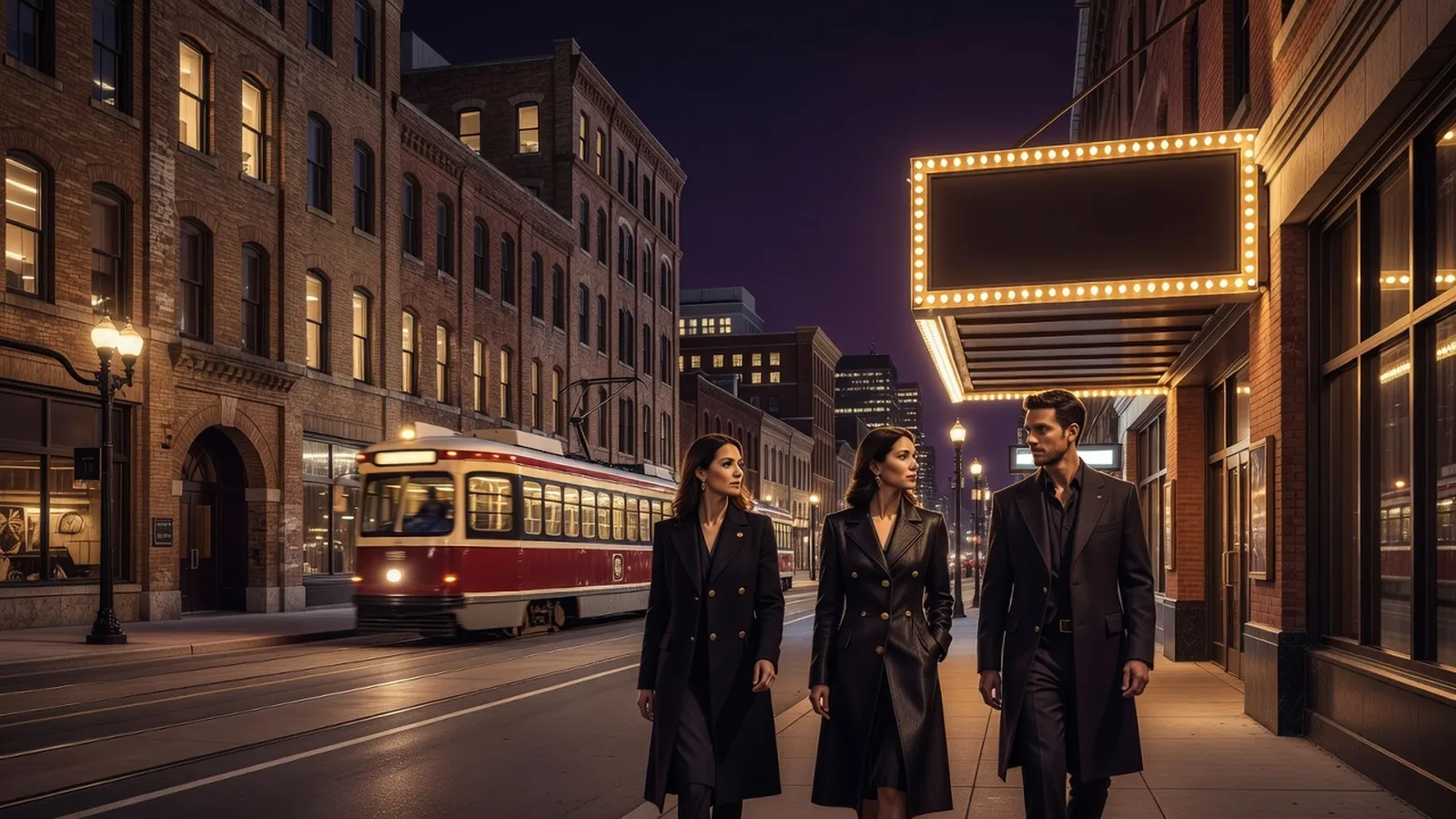
580 King Street West is an address on King Street West, in the part of downtown Toronto that shifted from industrial streets to a mixed neighbourhood after the City put a planning framework in place in 1996. A nightclub operated there from 2013 to about 2021. This article tells that story from official planning documents and a tourism guide, without naming the former club, and describes the area as it is today. This site is independent and has no link with that club.
From factory floors to a mixed neighbourhood
Every address on King Street West sits inside a larger story, and in this case it is the story of King-Spadina. The City of Toronto's secondary plan for the area describes a stretch of the downtown core that moved from being an industrial district to being a mixed neighbourhood. In that description, heritage buildings are reused for offices, cultural jobs and artistic uses, rather than being left empty or cleared away.
That sentence from the planning world is worth slowing down on, because it explains why a nightclub could exist at this address at all. A district built around manufacturing is not usually a place where people line up at night. A district that has been deliberately opened up to offices, studios, galleries, restaurants and performance spaces is. The City's own wording, available in the King-Spadina Secondary Plan, treats that reuse of older buildings as a feature of the area, not an accident.
This guide takes care over what it claims. The municipal documents it relies on describe the neighbourhood as a whole. They do not establish the opening date of any particular nightlife venue, and they do not describe the address's building room by room. So the pages below stay on firm ground: what the City says about the district, what a tourism guide says about the theatres, and what can fairly be said about a nightclub that operated from 2013 to about 2021.
1996: the planning decision that let old buildings take on new work
If one year anchors this story, it is 1996. That year, according to the City of Toronto's planning background report, the City put a planning framework in place for King-Spadina and King-Parliament, the two areas often grouped as "The Kings". The reason given was the decline of the manufacturing industry. The framework encouraged new uses in former industrial buildings.
It helps to picture what that meant in practice. When a factory or warehouse district loses its original tenants, the buildings do not vanish. They stand there, solid and often handsome, with large floor plates and high ceilings that suit very different uses from the ones they were built for. A planning framework that allows new uses gives owners a lawful way to bring those buildings back into service. The City's background report, published as part of its planning documents in 2017, records this shift. You can read it in the City's planning background report.
What the report does not do is list nightlife venues or date their openings. That is a useful reminder when you read history online. Planning documents speak in terms of land use and policy. They tell you why a district became welcoming to new activities, not which club opened in which month. Anyone who wants an exact opening date for a specific venue has to look elsewhere, and should be wary of any site that offers one without a source.
The district on paper: boundaries, buildings and a table of key facts
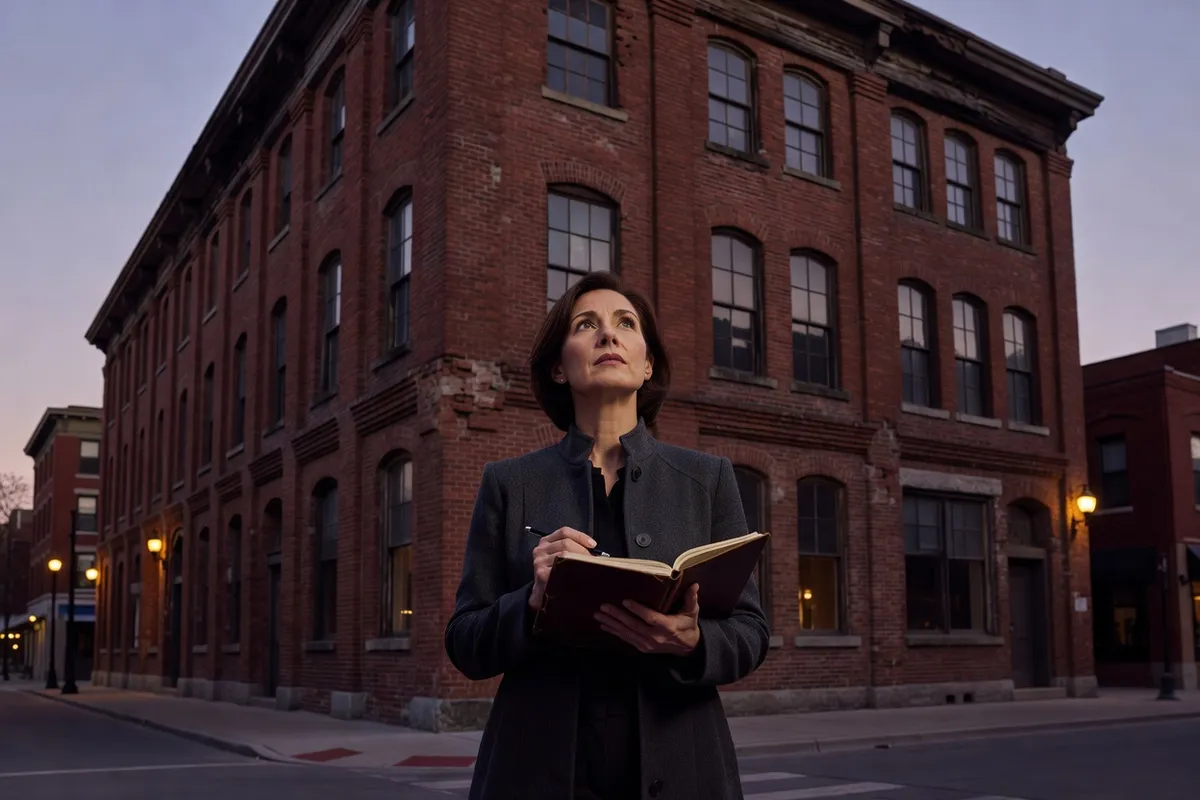
The heritage side of the story is the second pillar. The City's King-Spadina Heritage Conservation District covers about 45 hectares. Its boundaries, as the City describes them, run along Richmond Street West to the north and Simcoe Street to the east. To the south the district follows King Street West, Wellington Street West and Front Street West, and to the west it ends at Bathurst Street. Inside it are industrial and commercial buildings from the late 19th century and the first half of the 20th century.
King Street West is one of the streets named in that boundary description, so the history of an address on King West is tied to the district's history. Whether a particular building falls inside the district is a question for the plan itself and for the City, and the King-Spadina Heritage Conservation District Plan is the document to check before assuming anything about a specific property.
The table below gathers the dated and measurable facts used in this article, so you can see at a glance what each source actually says.
| Topic | What the source says | Reference |
|---|---|---|
| Heritage district size | About 45 hectares | King-Spadina Heritage Conservation District Plan |
| District boundaries | Richmond Street West (north), Simcoe Street (east), King, Wellington and Front Streets West (south), Bathurst Street (west) | King-Spadina Heritage Conservation District Plan |
| Building stock | Industrial and commercial buildings from the late 19th century and first half of the 20th century | King-Spadina Heritage Conservation District Plan |
| Neighbourhood character | From an industrial district to a mixed neighbourhood, with heritage buildings reused for offices, cultural jobs and artistic uses | King-Spadina Secondary Plan |
| Planning framework | Put in place in 1996 for King-Spadina and King-Parliament, in response to the decline of manufacturing | City planning background report (2017) |
| Theatre district | Concentrated on King Street West in the Entertainment District | Destination Toronto |
| Nightclub at the address | 2013 to about 2021; precise dates not established by municipal documents | Approximate span only |
Source: City of Toronto (King-Spadina Heritage Conservation District Plan; King-Spadina Secondary Plan; planning background report, 2017); Destination Toronto (guide to King Street West theatres).
A nightclub from 2013 to about 2021: the idea behind the room
Now to the address itself. From 2013 to about 2021, a nightclub operated at 580 King Street West. This guide deliberately does not name it. The reason is simple: the point of this page is the address and the district, not a brand, and this site has no relationship with the former business.
What can be said, in general terms, is that the place was built around a concept rather than around a dance floor alone. The idea, as it was presented to organizers at the time, was a venue with two rooms that drew on the contrast between older and modern ways of doing things. Those two rooms gave it a flexible shape. One part of an evening could be quieter and more conversational, another more energetic, and the same building could host a private gathering, a showcase or an ordinary night out. The venue also positioned itself as a stage for local artists, so that visual art and live performance were part of the identity rather than an afterthought.
This is a common pattern in Toronto's older districts. A building with real character, put to work as a venue with a clear point of view, often does better with its neighbours and its audience than a generic room. The King-Spadina plan's emphasis on cultural and artistic uses, which the City describes in its secondary plan, is the policy background to that pattern. A concept-led venue is one way that policy shows up on the street.
None of this requires specifics that would not stand up to checking. The decor, the programming and the people involved are not the subject here, and no figures such as capacities or prices appear in this article. If you are exploring the wider scene, our pillar page on Toronto after dark gives the overview of how nights out are organized across the city.
Why local artists and mixed spaces suit this part of town
The idea of a venue as a showcase for local artists deserves a closer look, because it connects to something the City says about the area. The secondary plan links reused heritage buildings with cultural jobs and artistic uses. That is a statement about economic and creative life, not only about architecture. It suggests that the neighbourhood's identity depends partly on the people who make things there.
The City also publishes material on music industry support, which signals that live music is treated as part of Toronto's cultural and economic life and not only as entertainment. This guide cites that page for context only. It does not draw numbers or programme details from it, and it does not say how any specific support applies to any specific venue.
Why does a mixed neighbourhood suit a venue like this? A few reasons follow from the planning descriptions, expressed in plain language:
- Older buildings tend to offer large, adaptable interior spaces that can be divided into rooms with different moods.
- A neighbourhood with offices, studios and cultural uses during the day often has a built-in audience in the evening.
- Heritage character gives a building a story that guests can read for themselves, from the brickwork to the proportions of the windows.
- A concentration of theatres and restaurants creates an evening habit: people already come to the area to go out.
None of these points is a promise that a given venue will succeed. They are simply reasons the combination of reused buildings and cultural activity has worked in many cities, and they match the way the City describes King-Spadina.
King Street West as a theatre street
Any account of this address has to mention the neighbours. Destination Toronto's guide to King Street West places the city's theatre district on this street, in the Entertainment District. It names the Princess of Wales Theatre, the Royal Alexandra Theatre and Roy Thomson Hall among the venues. You can read the full piece in the theatre lover's guide to King Street West.
This matters to the story of a nightclub for a practical reason. Theatres fill a street at fixed hours. Audiences arrive for an early evening curtain, walk to a restaurant before or after, and some carry on into the night. A street with that rhythm gives every other kind of evening venue a head start, because the foot traffic already exists. It also shapes expectations. People who go out on King West tend to think of the street as a place for an organized evening, with a beginning, a middle and an end.
A second point is about character. Theatres and clubs are different businesses, but they share a basic promise: you leave your ordinary day behind for a few hours. In a district whose buildings were first made for industry, that promise is a real change of use, and it is the kind of change the City's planning framework was designed to allow.
We do not describe any of these theatres beyond what the Destination Toronto guide says. If you want programme details or opening hours, use the theatres' own official sites, and not this article.
What happened after about 2021, and the neighbourhood today
The nightclub's span, 2013 to about 2021, is approximate for a reason. The municipal documents behind this article do not establish the opening or closing dates of nightlife venues, and this guide does not guess at them. What it can say is that the club operated for roughly the better part of a decade, and that its end falls around the beginning of the 2020s.
What the area looks like now is a question best answered with care. The structure the City describes is still the structure that matters: a district of about 45 hectares with a heritage character, a mixed set of uses, and a theatre cluster on King Street West. Individual businesses open and close, and a guide like this one cannot track every change. For a current picture of where people actually go out, from King West to other parts of the city, see our neighbourhood-by-neighbourhood guide to going out in Toronto after dark.
The lesson from an address like this is that the building and the district last longer than any single tenant. A property can hold a factory, then an office, then a venue, then something new, and the heritage framework is what keeps its shell and its street presence recognizable through those changes. For visitors and residents alike, King West stays a place where older architecture and new uses sit side by side. That is not a slogan; it is the plain description the City gives of the district.
How to research the history of any address in Toronto
The research habits used for this article can be reused. If you are curious about a building, a former venue or a street, a simple approach keeps you from repeating rumour:
- Start with the City of Toronto's planning documents for the area. They set out the district's boundaries, its character and the reasons behind its rules.
- Check whether the property sits inside a heritage conservation district, using the district plan itself, and not a secondhand summary.
- Read the planning background reports for dates and policy changes, and keep in mind that they usually do not list individual businesses.
- Look at a tourism or cultural source, such as Destination Toronto, for neighbours and context, and treat its details as a guide, not as legal advice.
- For anything that affects a booking or a contract, such as a venue's licence or your obligations as a renter, ask the organization responsible, and do not rely on a history page.
That last point is more than a courtesy. If you are thinking of hiring a space for a celebration, the questions that matter are about the lease, the permit and the rules that apply to your event. Our checklist on renting a private event space in Ontario covers what to confirm before you sign, and it is a better tool for that job than any history of an address.
A history page can still help you prepare. Knowing that a district has a heritage character, for example, tells you to ask early about what you may and may not change inside a protected building, such as decoration, signage or load-in. Those are questions for the venue and the City, and the answer varies from building to building.
Planning a night in the area without relying on old reputations
Visitors sometimes arrive in a neighbourhood with an image shaped by a venue that has closed. It is worth separating the reputation of one business from the current reality of the area. A closed club leaves no programme and no guest list, and the street moves on with its other tenants.
If you are organizing something yourself, such as a birthday, a staff evening or a larger celebration, think in terms of what the neighbourhood offers now, and ask each venue for current information directly. An experienced planner would say much the same, and the interview on organizing a private party in Toronto, an event planner's perspective, sets out how such evenings are put together from the host's side. That interview features an expert imagined for this guide, and it is there to give practical context, not to describe any real business.
A few reminders when you use history as a planning aid:

- Old reviews and photos describe a moment, not the present.
- A venue's website and licensing information are the right place to confirm current details.
- A tourism guide can point you to a street, but it does not replace a conversation with the venue.
- If a source gives a precise date or a number without saying where it comes from, treat it with caution.
About this site, and a note on independence
King West Journal is an independent editorial guide to going out, celebrating and listening to live music in Toronto and across Ontario. It is not a venue, not an event organizer and not a ticket seller, and it has no connection with the former nightclub discussed in this article, with any of its former owners, or with anyone who previously held the web address. The address "580 King Street West" appears here only because it is a real place with a documented neighbourhood history, and the article is limited to that history.
The same limits apply to the way this article was written. It uses the City of Toronto's planning documents and one tourism guide for its facts, it gives no prices, capacities or ticket details, and it names no individuals. Where a fact is not established by those sources, such as the exact opening or closing date of the nightclub, the text says so, and gives an approximation.
If something here looks out of date, the best check is the original source. The City's heritage and secondary plans, its planning background report and the Destination Toronto guide are all linked in this article, so that you can read them yourself.
Verified on 2026-11-27.
Frequently asked questions
What was at 580 King Street West?
A nightclub operated at this King West address from 2013 to about 2021. This guide does not name it, and it has no connection with it. Precise opening and closing dates are not established by the municipal documents used here, so only the approximate span is given.
Why did King-Spadina change from an industrial area to a mixed one?
The City of Toronto describes the area as having moved from an industrial district to a mixed neighbourhood. In 1996 it put a planning framework in place for King-Spadina and King-Parliament in response to the decline of manufacturing, which encouraged new uses in former industrial buildings.
How big is the King-Spadina heritage conservation district?
According to the City of Toronto, the district covers about 45 hectares. It runs between Richmond Street West to the north, Simcoe Street to the east, King Street West, Wellington Street West and Front Street West to the south, and Bathurst Street to the west.
Which theatres are on King Street West?
Destination Toronto's guide places the theatre district on King Street West in the Entertainment District, and names the Princess of Wales Theatre, the Royal Alexandra Theatre and Roy Thomson Hall among its venues.
Is this site connected to the former nightclub?
No. King West Journal is an independent editorial guide. It is not an establishment, an event organizer or a ticket seller, and it has no affiliation with the former nightclub or with any former owner.
General information only. It does not replace advice from a lawyer or legal adviser; rules change, so check with the organization cited.
The King West Journal editorial team
Frequently asked questions
What was at 580 King Street West?
A nightclub operated at this King West address from 2013 to about 2021. This guide does not name it, and it has no connection with it. Precise opening and closing dates are not established by the municipal documents used here, so only the approximate span is given.
Why did King-Spadina change from an industrial area to a mixed one?
The City of Toronto describes the area as having moved from an industrial district to a mixed neighbourhood. In 1996 it put a planning framework in place for King-Spadina and King-Parliament in response to the decline of manufacturing, which encouraged new uses in former industrial buildings.
How big is the King-Spadina heritage conservation district?
According to the City of Toronto, the district covers about 45 hectares. It runs between Richmond Street West to the north, Simcoe Street to the east, King Street West, Wellington Street West and Front Street West to the south, and Bathurst Street to the west.
Which theatres are on King Street West?
Destination Toronto's guide places the theatre district on King Street West in the Entertainment District, and names the Princess of Wales Theatre, the Royal Alexandra Theatre and Roy Thomson Hall among its venues.
Is this site connected to the former nightclub?
No. King West Journal is an independent editorial guide. It is not an establishment, an event organizer or a ticket seller, and it has no affiliation with the former nightclub or with any former owner.
Sources
Verified on
- City of Toronto, King-Spadina Heritage Conservation District Plan, City of Toronto, 2026.
- City of Toronto, King-Spadina Secondary Plan, City of Toronto, 2026.
- City of Toronto, King-Spadina and King-Parliament planning background report, City of Toronto, 2026.
- Destination Toronto, A theatre lover's guide to King Street West, Destination Toronto, 2026.
- City of Toronto, Music industry support, City of Toronto, 2026.