
For dinner followed by dancing, Destination Toronto points to King West. For a looser, creative night on foot, Queen West and Ossington fit better, and the Entertainment District works as a downtown base built around the theatre quarter. This guide compares these neighbourhoods by atmosphere, sets out the alcohol hours and age rules that apply across Ontario, and explains how to get home once the subway stops running.
Start with the atmosphere, not the address
Most nights out in Toronto go wrong for a simple reason: the group picked a place before agreeing on what kind of evening it wanted. One person imagined a long dinner and a conversation, another wanted a dance floor at midnight, a third assumed everyone would wander between places. Each of those plans points to a different part of the city.
That is why this guide is organized by neighbourhood and by mood. It does not rank venues, and it does not recommend a particular bar, restaurant or club. It tells you what the official tourism and transit sources say about each area, adds some practical judgment about how an evening tends to unfold there, and flags what you still need to confirm yourself before you leave the house.
A few ground rules about what you will and will not find here. You will find the neighbourhoods that Destination Toronto itself names in its nightlife guide, plus two more it presents in its neighbourhood index. You will find the legal framework that applies to every licensed venue in the province. You will not find opening hours, programmes or prices for individual places, because those change and the sources we rely on do not publish them. Where a detail is missing, the text says so rather than guessing.
If you want the wider picture of how Toronto's evenings are organized, from live music to private events, the Toronto after dark overview is the best companion to this page. What follows is the close-up view, one neighbourhood at a time.
King West: dinner first, dancing after
Destination Toronto describes King West as an area of restaurants and evening dancing, and that two-part description is the most useful thing to know about it. The neighbourhood suits a night with a shape: a table early, then a move toward music and a dance floor later. Groups who plan it that way tend to have an easier time than groups who arrive at eleven with no reservation and no plan.
The practical consequence is timing. If the evening starts with dinner, the sensible order is to settle the meal first and decide on the second stop afterwards, depending on energy and on what is open. The neighbourhood is dense enough that a short walk usually separates one part of the night from the next, which makes it forgiving for groups that change their minds.
King West also carries a history that matters to anyone interested in how Toronto's nightlife developed. A stretch of the street hosted a well-known nightclub from 2013 to around 2021, and its story says a good deal about how the area changed. We tell that story separately, with dated facts, in a look back at the history of a King West address. This site has no connection with that venue; it is an independent editorial guide, and it does not organize events, run venues or sell tickets.
Who is King West for? Groups that want a structured evening, celebrations where a dinner is part of the plan, and people who like having several choices within a short walk. Who might find it less comfortable? Anyone looking for a quiet conversation late at night, or a night with no planning at all. Weekend evenings in a dining and dancing district reward preparation.
What to check before you go: whether your dinner venue has a time limit on the table, whether the place you want for later has any entry conditions, and how you will get home. We come back to that last point below, because it is the one people forget.
Queen West and Ossington: a night on foot
Destination Toronto describes Queen West as an area of energy and local designers, and Ossington as one of the city's most talked-about streets. Put those two descriptions side by side and a type of evening emerges: a night spent moving, with less emphasis on a single destination and more on discovering what is along the way.
Queen West suits the group that likes to wander. The area's identity, according to the tourism body, is tied to local creators, so the character of the street is varied rather than uniform. That variety is the point. You might start in one place, drift to another because something caught your eye, and end the evening somewhere you had not planned. It is a poor fit for a group that needs a fixed reservation at a fixed time, and a very good one for a group that enjoys improvising.
Ossington works differently. Because it is a single street with a strong reputation, the evening tends to concentrate there. That concentration has an advantage and a drawback. The advantage is that everything is close, so a group can split up and regroup without difficulty. The drawback is that popular streets draw crowds, so a flexible attitude toward waiting, and a second option in mind, will serve you well. The sources do not provide hours or programmes for the street, so look at each venue's own channels on the day.
A useful way to choose between the two: ask the group whether it prefers a longer, more varied route or a shorter, more concentrated one. Queen West rewards the first preference, Ossington the second. Neither is a bad answer, and some groups combine them, starting on one and finishing on the other.
Both areas are served by the overnight network described later in this guide, which includes a route named for Queen. That makes the ride home easier to plan than it first appears.
The Entertainment District: where the theatres set the rhythm
Destination Toronto presents the Entertainment District as a downtown area centred on King Street West and the theatre quarter. The source does not fix the exact boundaries of the district, so it is wiser to think of it as a zone than as a precise map. That also means it overlaps in places with the King West described above, which is part of why visitors sometimes treat the two names as interchangeable.
What distinguishes the area is its connection to performance. Evenings here often have a natural first act: a show, a concert or another scheduled event, followed by a meal or a drink afterwards. If your plan has a fixed start time, the district gives you a reliable anchor, and the rest of the night can be built around it. If your plan has no fixed event, the area is still useful as a central base, because it is easy to reach from the rest of downtown.
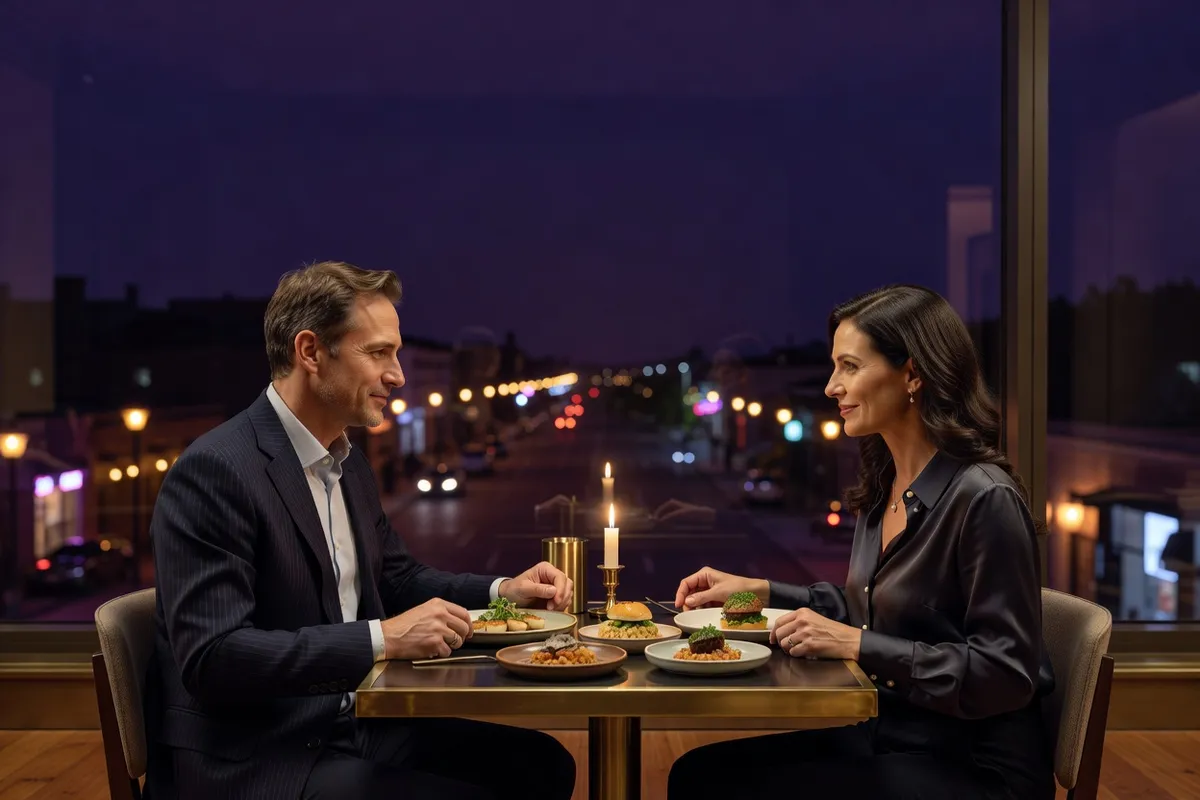
A few cautions apply. The first is that pre-show and post-show timing can be tight. A dinner that runs long can cost you the start of a performance, so ask how long the table is yours before you commit. The second is that late-night choices narrow as the evening goes on, so if you want food after a show, make a note of where you will go rather than hoping for the best. The third is that this is the area where a group is most likely to be split between people who want to continue and people who want to go home, so agree in advance how you will handle that.
The district works best for mixed groups: people who want culture, people who want a meal and people who want a lively finish, all within a short distance of each other. For a quick look at how the tourism body describes it, see Destination Toronto's Entertainment District page.
The Distillery District and Kensington Market: two more starting points
Destination Toronto lists the Distillery District and Kensington Market among the neighbourhoods it presents, and both can serve as starting points for an evening. The honest limit here is that the source is a discovery page: it introduces the areas without publishing hours, programmes or listings. So this section is shorter than the others on purpose, and it tells you how to use these two names rather than what is happening in them tonight.
The Distillery District is a destination in its own right, and it suits a planned outing better than an improvised one. If you are thinking of it for a special evening, look up what is scheduled on the date you have in mind, and confirm anything you read with the venue directly. Programmes change from season to season, and an out-of-date listing can send a whole group to the wrong place.
Kensington Market has a different character. It is a neighbourhood people often associate with a relaxed, informal mood, and that fits a casual evening more than a formal one. As with the Distillery District, we do not have a dated, sourced programme to point to, so treat it as a place to explore and check, not a guaranteed itinerary.
These two areas are also a good reminder that a night out does not have to happen on the busiest street. If your group is small, or prefers a calmer pace, starting away from the crowds can make the whole evening easier. You can browse all the areas the tourism body presents on its neighbourhood index, then match them to the mood you described at the start. If your plans lean toward a gathering rather than a night out, our checklist on renting a private event space in Ontario explains what to verify before booking a room.
The neighbourhoods side by side
The table below condenses what the sources say into a quick comparison. The columns are deliberately practical: the atmosphere, who it tends to suit, and what you should verify before heading out. Nothing in it is a price, a capacity or a promise about a particular venue.
| Neighbourhood | Atmosphere | Who it suits | What to check |
|---|---|---|---|
| King West | Restaurants and evening dancing | Groups wanting dinner, then a dance floor | Table timing, entry conditions at your second stop |
| Queen West | Energy and local designers | Groups that like to wander and improvise | Which places are open on the night, the route home |
| Ossington | One of the city's most talked-about streets | Groups happy to stay on a single street | Crowds and waiting, a second option |
| Entertainment District | Downtown, around King Street West and the theatre quarter | Mixed groups building the night around a show | Event start time, late food options |
| Distillery District | A destination neighbourhood presented by the tourism body | Planned outings, small groups | The programme on your date, directly with the venue |
| Kensington Market | A neighbourhood presented by the tourism body | Casual, informal evenings | What is open, since no programme is published |
Source: Destination Toronto, Toronto nightlife guide, Entertainment District page and neighbourhood index; TTC, Blue Night Network.
Read the table as a starting point for a conversation, not a verdict. If two columns point to the same area for your group, that is probably where you should begin. If they disagree, the "what to check" column tells you what to find out before you decide.
The rules that apply wherever you go
Some rules do not change from one neighbourhood to the next, because they come from the province. Knowing them in advance saves arguments at the door.
Alcohol hours. According to the Alcohol and Gaming Commission of Ontario (AGCO), an establishment with a liquor licence may sell and serve alcohol from 9 a.m. to 2 a.m. every day. On January 1, for New Year's Eve, the limit extends to 3 a.m. The AGCO also notes that the conditions attached to a particular licence can impose shorter hours. In practice, that means 2 a.m. is a ceiling and not a guarantee: a venue may close earlier, and the time on its door or its website is the one to trust. You can read the rule on the AGCO's page about hours of liquor sale and service.
Legal age. The legal age to buy, possess and consume alcohol in Ontario is 19. The AGCO states that valid, official photo identification showing your date of birth is required when there is any doubt about age. This is not a technicality: staff are expected to check, and a group where one person has left their identification at home can find the evening interrupted. The details are on the AGCO's page about legal drinking age and photo ID.
Two other points follow from these rules. First, if your plan depends on being somewhere at a particular late hour, remember that the legal framework works against you after 2 a.m.; the second half of a late night often moves from licensed venues to food or to home. Second, a group that includes people under 19 should settle in advance which parts of the evening are suitable for everyone. That conversation is easier in the afternoon than at a door at midnight.
Getting home: subway, Blue Night, taxis and private rides
The ride home is the part of the night that most guides skip, and it is the part that shapes the whole evening. A good plan for getting back makes you more relaxed about everything else.
The Toronto subway stops running at around 1:30 a.m. That time is approximate, so confirm the current schedule on the TTC website. After the subway stops, the TTC's Blue Night network takes over. According to the TTC's official map, it provides overnight service from about 1:30 a.m. until the subway resumes, seven days a week. The routes are numbered in the 300 series, and two examples are 301 Queen and 304 King. Those names are useful here, because they run along the streets this guide has been discussing. The frequency and exact schedule are not something we can state with confidence, because the TTC publishes them on a page that updates dynamically. Check the TTC's Blue Night Network page before you rely on a specific bus.
Beyond transit, most groups keep two other options in mind:
- Taxis. Useful when the group is small or the route is awkward, and often the simplest choice at the end of a long evening.
- Private transport. Ride services and arranged cars suit larger groups and anyone who prefers a fixed pick-up. We do not recommend a provider, and the sources do not give fares, so agree how the cost will be shared before the evening starts.
A final suggestion: decide who is going home which way before the first drink. A group that splits at the last minute, with one person taking a night bus alone, is the scenario worth avoiding. Groups that leave together, or that confirm each other's arrival by message, tend to have a better night than groups that scatter.
A planning checklist for the evening
The list below turns the preceding sections into a short routine. It works for a casual night as well as for a celebration.
- Agree on the mood first: structured with dinner and dancing, a walking night, or a show-centred evening.
- Pick the neighbourhood that matches, using the table above.
- Look up each place's own hours and entry conditions on the day, since no tourism source publishes them.
- Confirm that everyone has valid photo identification and that the group is old enough for each part of the plan.
- Note the 2 a.m. alcohol limit and plan food or a change of scene for after it.
- Decide the route home before leaving, including the subway's closing time and the Blue Night option.
- Keep a backup: a second place nearby and a second way of getting home.
If your night is part of a larger celebration, the planning is a little different. A group organizing a farewell to single life will find specific suggestions in our guide to a bachelorette party in Toronto by group size and budget. And if you are thinking of hosting at a private venue instead of heading out, the interview with an event planner on organizing a private party covers the questions to ask before you commit.
What these neighbourhoods have in common
Step back from the individual areas and a pattern shows. In every case, the sources describe a mood and not a timetable. King West is dining and dancing, Queen West is energy and local creators, Ossington is a street people talk about, and the Entertainment District is a theatre-centred downtown zone. The tourism body gives you the character of each place and leaves the specifics to the venues themselves.
That division of labour is worth respecting. Use the character to choose a direction, and use the venue's own channels to confirm the details. An evening planned this way is rarely ruined by a closed door or a missed bus, because every assumption has been checked once.
It also means the best preparation is modest. You do not need a long itinerary; you need a clear mood, one or two checked options, a plan for identification and a plan for getting home. Everything else can stay flexible, and in a city where the evening often changes direction halfway through, flexibility is a strength.
Frequently asked questions
Which Toronto neighbourhood is best for dinner followed by dancing?
Destination Toronto describes King West as an area of restaurants and evening dancing, which makes it the natural starting point for that kind of night. The Entertainment District, centred on King Street West and the theatre quarter, sits close by. Neither source gives venue hours, so check each place directly.
What is the last call for alcohol in Toronto?
In Ontario, a licensed establishment may sell and serve alcohol from 9 a.m. to 2 a.m. every day, with an extension to 3 a.m. on January 1 for New Year's Eve. The conditions of a venue's licence can impose shorter hours, so the posted closing time is the one that counts.
How old do you have to be to go out drinking in Ontario?
The legal age to buy, possess and consume alcohol in Ontario is 19. If there is any doubt, you can be asked for valid, official photo identification that shows your date of birth, so carry it with you.
How do I get home after the subway stops?
The TTC Blue Night network provides overnight service from about 1:30 a.m. until the subway reopens, seven days a week, on numbered routes in the 300 series such as 301 Queen and 304 King. Check the TTC site for current frequencies, and keep a taxi or private ride as a backup.
Is Ossington or Queen West better for a night on foot?
Both suit a night spent moving between places rather than staying in one. Destination Toronto describes Queen West as a district of energy and local designers and Ossington as one of the city's most talked-about streets. The choice comes down to whether you want a longer, more varied walk or a single street to focus on.
General information only. It does not replace advice from a lawyer or legal adviser; rules change, so check with the organization cited.
The King West Journal editorial team
Frequently asked questions
Which Toronto neighbourhood is best for dinner followed by dancing?
Destination Toronto describes King West as an area of restaurants and evening dancing, which makes it the natural starting point for that kind of night. The Entertainment District, centred on King Street West and the theatre quarter, sits close by. Neither source gives venue hours, so check each place directly.
What is the last call for alcohol in Toronto?
In Ontario, a licensed establishment may sell and serve alcohol from 9 a.m. to 2 a.m. every day, with an extension to 3 a.m. on January 1 for New Year's Eve. The conditions of a venue's licence can impose shorter hours, so the posted closing time is the one that counts.
How old do you have to be to go out drinking in Ontario?
The legal age to buy, possess and consume alcohol in Ontario is 19. If there is any doubt, you can be asked for valid, official photo identification that shows your date of birth, so carry it with you.
How do I get home after the subway stops?
The TTC Blue Night network provides overnight service from about 1:30 a.m. until the subway reopens, seven days a week, on numbered routes in the 300 series such as 301 Queen and 304 King. Check the TTC site for current frequencies, and keep a taxi or private ride as a backup.
Is Ossington or Queen West better for a night on foot?
Both suit a night spent moving between places rather than staying in one. Destination Toronto describes Queen West as a district of energy and local designers and Ossington as one of the city's most talked-about streets. The choice comes down to whether you want a longer, more varied walk or a single street to focus on.
Sources
Verified on
- Alcohol and Gaming Commission of Ontario, Hours of liquor sale, service and delivery, AGCO, 2026.
- Alcohol and Gaming Commission of Ontario, Legal drinking age and photo identification, AGCO, 2026.
- Destination Toronto, Toronto nightlife guide, Destination Toronto, 2026.
- Destination Toronto, Entertainment District, Destination Toronto, 2026.
- Destination Toronto, Neighbourhoods of Toronto, Destination Toronto, 2026.
- Toronto Transit Commission, Blue Night Network, TTC, 2026.