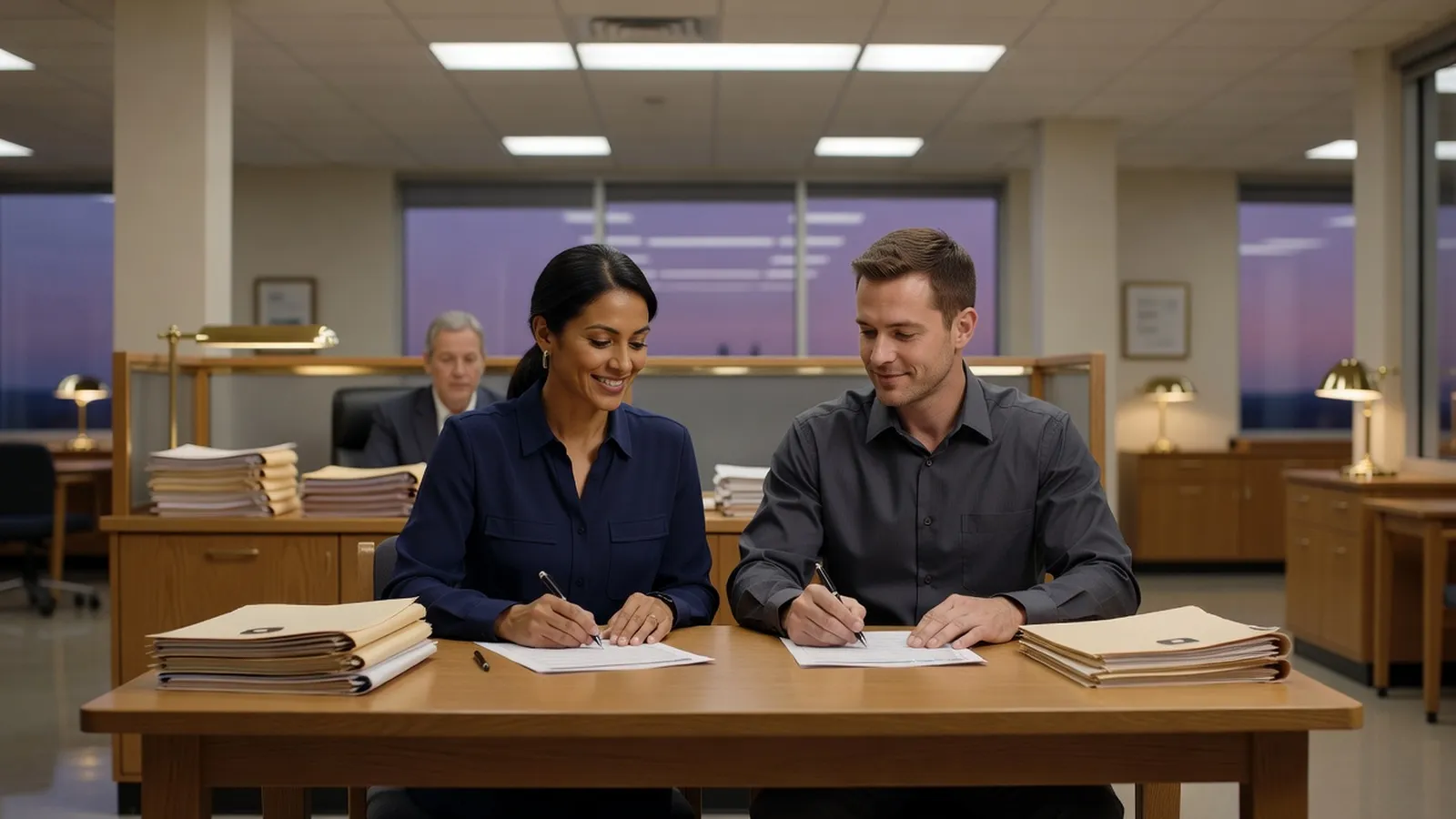
If you’re getting married in Ontario and one of you is coming from abroad, arrange an Ontario marriage licence, an authorized officiant and witnesses. Check early for extra paperwork if either of you divorced outside Canada. The wedding does not give the visiting spouse Canadian immigration status, and it does not settle how another country will recognize the marriage. Treat travel to Canada, the Ontario ceremony and any later use of your marriage documents abroad as separate tasks.
Verified on 27 November 2026
Start with the decision you need, not the document you have
A passport, a marriage licence and proof of marriage serve different purposes. If one of you is travelling to Toronto for the wedding, it’s tempting to keep everything under a single heading: wedding paperwork. Instead, organize your questions by who can answer them. The office handling your licence isn’t deciding admission to Canada. The border officer isn’t deciding if an authority abroad will accept your proof of marriage.
| If you’re trying to… | Start with… | Ask… |
|---|---|---|
| Hold a marriage ceremony in Ontario | Ontario’s marriage guidance and the office issuing the licence | What do we need to present, and what must be resolved before the licence can be issued? |
| Come to Canada for the wedding | Immigration, Refugees and Citizenship Canada (IRCC) visitor guidance | Which travel document applies, and what should we confirm for the planned visit? |
| Use proof of the marriage abroad | The authority that will receive the document | What proof will you accept, and does it need an apostille or authentication? |
| Explore spousal sponsorship | IRCC’s sponsorship eligibility guidance | Do we meet the requirements to apply separately from the wedding? |
Source : Government of Ontario, Getting married; IRCC, visitor guidance and sponsorship eligibility; Global Affairs Canada, guidance on document authentication.
The federal Civil Marriage Act provides the Canadian framework: non-residents and foreign nationals can marry in Canada if the marriage meets Canadian requirements. Same-sex marriage is legal across Canada. Neither point tells you what a particular authority outside Canada will accept. For an Ontario wedding, start with the requirements for the ceremony here, then make a separate inquiry if you know you’ll need to use proof of the marriage abroad.
Our guide to weddings and celebrations in Canada puts the ceremony in the context of the rest of the planning. For this wedding, a useful first conversation is about commitments: what can you arrange now, and what would you rather leave flexible until the paperwork is settled?
Build the Ontario licence file around both applicants
According to Ontario’s guide to getting married, each person presents two pieces of government-issued identification, at least one with a photo. Think of that as a check for each of you, not a shared stack of documents. If you’re relying on identification issued abroad, ask the office that will issue the licence about the particular documents you have. That’s a more useful question than asking broadly if foreign identification is accepted.
Set aside time to compare the names shown on your documents before you arrange to submit them. A different order of names or a spelling that varies between records is a reason to ask how to proceed, not to guess which version to use. Describe the difference when you contact the office. If you don’t know what form of a document to bring, ask about that specifically rather than assuming a scan or a copy will do.
When you review the file together, work through these questions:
- Which pieces of identification will each of you present, and which one has a photo?
- Is there anything about a name or document that you need the issuing office to clarify?
- Was either person previously divorced outside Canada, and has the separate paperwork been addressed?
- Does the intended ceremony date fit the licence window, or is it still too early to commit to that date?
That last question matters because Ontario’s marriage guidance says the ceremony must take place within three months after the licence is issued. Getting the licence as early as you can isn’t necessarily the right planning goal. Work back from the ceremony and distinguish between preparing the documents now and having the licence issued for the intended date. If the wedding moves, put the licence window back on the list of things to check.
Ontario’s guidance also says that people aged 16 or 17 need the required written consent from parents or guardians to marry. That’s a rule for the Ontario marriage process, not the age rule for spousal sponsorship. If consent applies, check with the issuing office about what it needs before you count on a ceremony date.
Give a divorce outside Canada its own line on the schedule
A prior divorce outside Canada is more than another item to bring on the day. The Government of Ontario’s marriage licence application guidance requires the divorce judgment in English or French, a statement of sole responsibility and a legal opinion from an Ontario lawyer before the licence can be issued. The provincial guidance does not list Canadian residence as a requirement. In other words, where you live and where a previous divorce was granted are different questions; don’t treat one as the answer to the other.
Start by looking at the record you actually have. If it isn’t in English or French, ask what the office will accept for the language requirement. If you have a document but aren’t sure it’s the judgment the province is asking for, describe it and ask what you need to obtain. A quick check of what’s in hand can head off a rush for documents after you’ve told people when to travel.
The practical distinction is between gathering the papers and being ready for licence issuance. Even if you have the judgment, the Ontario guidance still calls for the statement and the legal opinion. Keep track of those separately. If you’re comparing dates for a Toronto wedding, mark the licence as pending until you know where the foreign divorce file stands. That way a date pencilled in for a family gathering doesn’t turn into an assumption that the licence is ready.
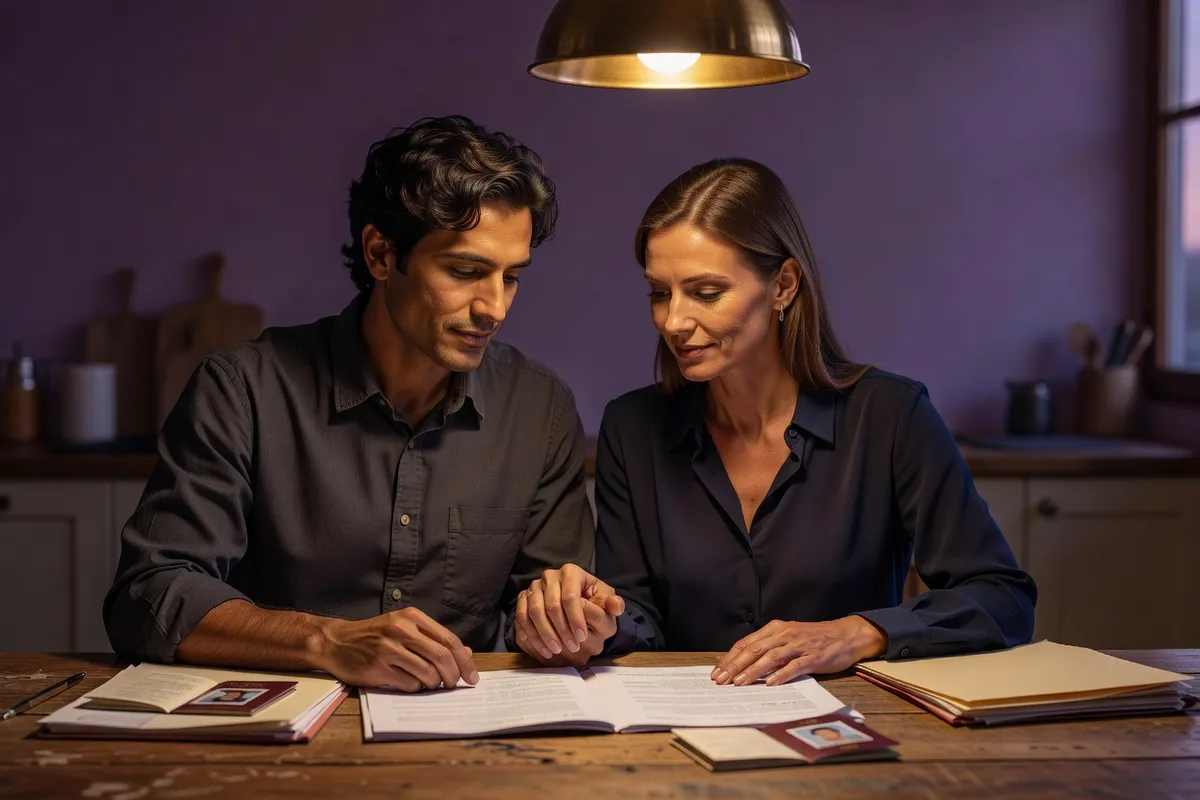
You can keep planning while you clarify the documents. Discuss the kind of gathering you want, talk through travel plans and decide what you can move if necessary. Before making a difficult-to-change commitment, ask who will confirm that the file is ready for the licence and what remains outstanding. A short update that says which document is still needed is more useful than a general assurance that the paperwork is underway.
Plan the ceremony itself before you plan the room around it
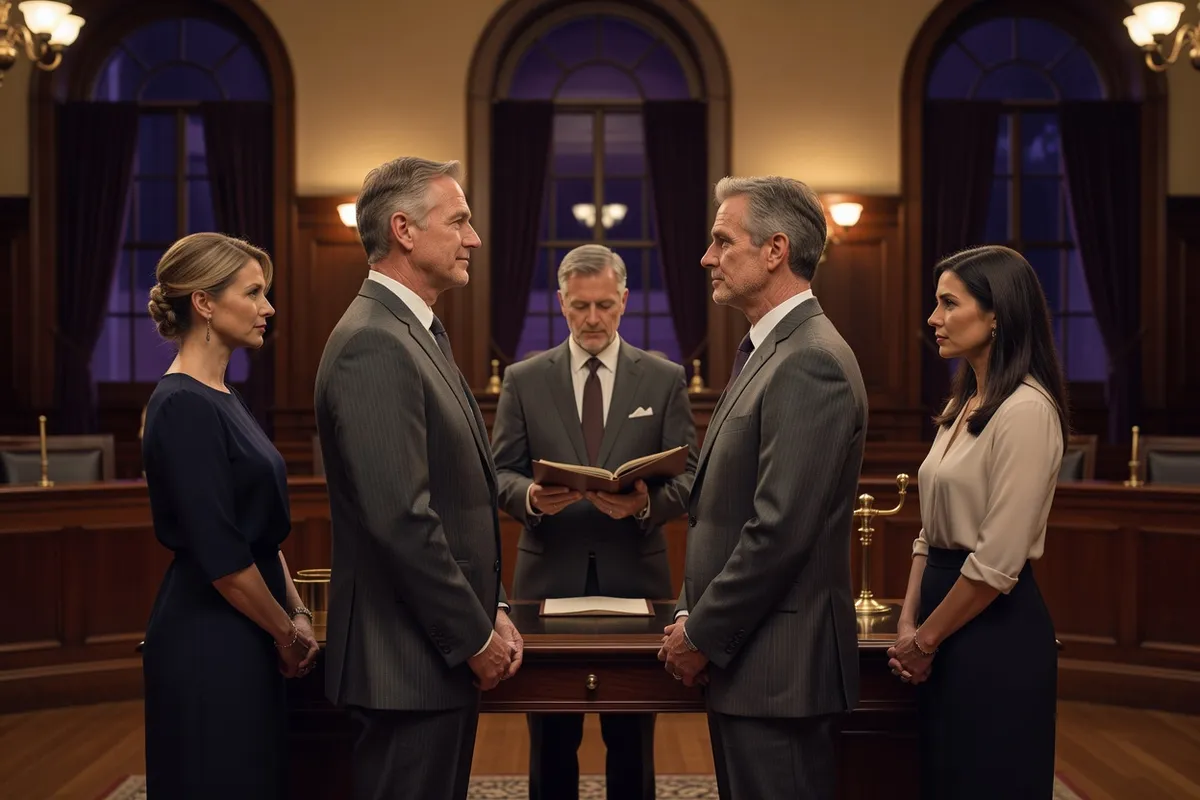
Ontario’s marriage guidance requires an authorized officiant and at least two witnesses. The officiant can be authorized to perform civil marriages or be a registered religious officiant. If someone is already involved in planning or leading your celebration, don’t assume they’re the person authorized to perform the marriage. Confirm who is handling the ceremony and make sure that person knows where and when you’re planning to hold it.
Choose your witnesses deliberately, especially if the people you have in mind are coming from abroad. Talk about when they’re expected to arrive and what you’ll do if they’re delayed. You don’t have to build the whole wedding around a flight itinerary, but you can identify people who will already be present rather than leaving the witness arrangements until guests start arriving.
If you expect to hold the ceremony and the reception at the same address, our comparison of Ontario wedding venue types can help you ask about the space for each part of the day. Look at where the ceremony would happen, how people would get to it and what the alternative would be if the planned setup changed. A room that works for dinner still needs to work for the ceremony if you intend to hold both there.
When you’re ready to discuss terms for a space, use the Ontario private event rental checklist to separate what is agreed from what you’re assuming. Ask what can be moved if the documents take longer to sort out, and which arrangements you’d need to make again if the ceremony date changed. Get clarity before you coordinate a room, an officiant and travellers around the same date.
On the day’s shared schedule, mark the ceremony separately from arrivals, photographs and the meal. Give the officiant and witnesses the ceremony details directly. If you’re planning a reception that starts later or takes place elsewhere, send guests the information that applies to them rather than expecting everyone to interpret the same itinerary.
Treat the visit to Canada as a separate plan
IRCC’s visitor guidance explains that a foreign visitor can marry in Canada if the applicable provincial requirements are met. Depending on nationality, the visitor may need a visitor visa or an electronic travel authorization (eTA). The border services officer decides admission. A ceremony date and an Ontario marriage licence are relevant to the wedding plans, but neither decides if someone can enter Canada.
IRCC says visitors should answer honestly about the purpose of the stay. If the visit is for a wedding, be straightforward about that. Check travel requirements for the person travelling rather than borrowing an answer from a relative’s previous trip. Even within the same wedding party, the right question is what applies to each traveller. Keep that inquiry separate from questions about which documents the couple will present to the licence issuer.
Plan the visit around what you know, and keep a clear list of what is still uncertain. A useful itinerary distinguishes the proposed arrival, the ceremony and the plans after it. If you’re still waiting for a travel decision, talk about how you’ll update relatives rather than presenting every part of the schedule as fixed. Our interview on planning an Ontario wedding with guests from abroad looks at the guest side of those arrangements.
The marriage itself does not confer Canadian immigration status. If one of you is visiting, don’t use the wedding date as the basis for deciding how long that person can stay. Check the conditions of the visit separately. If the plan is to live together in Canada, review the relevant immigration process with IRCC rather than treating the ceremony as the step that authorizes the move.
Ask what proof an authority abroad will accept
The question isn’t simply “Is our marriage recognized abroad?” It’s “What will the authority handling our request accept as proof of this marriage?” Global Affairs Canada’s guidance on document authentication explains that recognition depends on the law of the country where you want the marriage recognized. Start with the authority that will receive the document, particularly if you know what you’ll be using it for.
In your inquiry, say that the ceremony will take place in Ontario and explain why you need to submit proof. Ask which document the authority wants and in what form. If it asks for a marriage certificate, for example, don’t assume the licence you obtained for the ceremony answers that request. Use the receiving authority’s wording when making follow-up inquiries so you don’t end up arranging the right service for the wrong document.
An apostille or authentication may be required. Global Affairs Canada says Canada has been a party to the Apostille Convention since January 11, 2024, but that date doesn’t tell you what a particular authority abroad will ask for. Confirm what the authority wants before seeking either service. Keep separate the question of how a document must be prepared for use abroad and the question of how the receiving country treats the marriage itself.
If the reply is vague, follow up with specific questions: Does the authority want a particular version of the document? Does it want an apostille or authentication? Does it have instructions about the language in which the document must be submitted? Save the answer with your records, especially if the wedding and the later submission will be handled by different people.
There’s no need to guess at a document request that hasn’t been made. If you know which authority will be using your proof of marriage, ask early enough to factor its answer into your plans. If you don’t yet know where the document will be used, keep track of what you have and wait to confirm the requirements for that use rather than assuming one answer applies everywhere.
Read the sponsorship rules before making plans to move
Marriage and sponsorship are separate. If you want to explore living together in Canada, begin with IRCC’s spousal sponsorship eligibility guidance. IRCC says the sponsor must be at least 18 and must be a Canadian citizen, a permanent resident or a person registered under the Indian Act. The spouse being sponsored must also be at least 18. The sponsor generally lives in Canada, and a permanent resident living abroad cannot sponsor. Those are eligibility points to check, not a prediction about an application.
The residence question is easy to miss when a couple lives abroad and is looking at Ontario for the ceremony. The fact that you can marry here without residing here does not tell you if you can sponsor from where you live. Read the guidance for your circumstances before making commitments about when either person will move, or assuming the person visiting for the wedding will remain in Canada afterward.
There is also a separate immigration rule about the relationship itself. Under section 4 of the federal Immigration and Refugee Protection Regulations, published by Justice Canada, a foreign national is not considered a spouse for immigration purposes if the marriage was entered into primarily to obtain a status or privilege under the Act, or if the marriage is not genuine. The two grounds are alternatives. Holding a marriage ceremony that meets Ontario’s requirements does not by itself answer either question under the immigration rules.
It helps to keep separate notes for the licence, the visit and any sponsorship plans. Use the wedding schedule to track the ceremony, not to estimate when you might be able to live together in Canada. If there’s an unanswered immigration question, write it down in plain language and take it to IRCC as its own inquiry. You can make plans for a celebration without presenting those plans to each other or to your guests as a settled moving date.
Frequently asked questions
Can we marry in Ontario if one of us lives abroad?
Yes, if you meet the marriage requirements. Ontario’s marriage licence guidance does not list Canadian residence as a requirement. Permission to enter Canada is a separate decision.
What identification do we need for an Ontario marriage licence?
Ontario’s marriage guidance says each person must present two pieces of government-issued identification, with a photo on at least one of them. Check with the licence issuer before relying on a particular document from abroad.
Can we get a licence if one of us divorced outside Canada?
A divorce abroad adds a step before Ontario can issue the licence. Ontario’s application guidance calls for the divorce judgment in English or French, a statement of sole responsibility and a legal opinion from an Ontario lawyer.
Does marrying in Ontario let a visitor stay in Canada?
No. Marriage does not give a visitor immigration status or extend the stay on its own. Check with Immigration, Refugees and Citizenship Canada about the conditions of the visit and any separate immigration process.
Will our Ontario marriage be recognized abroad?
That depends on the law of the country where you want it recognized. Global Affairs Canada advises checking with the authority that will receive the document to learn what proof it accepts and if it requires an apostille or authentication.
The King West Journal editorial team
General information only. It does not replace advice from a lawyer or legal adviser; rules change, so check with the organization cited.
Frequently asked questions
Can we marry in Ontario if one of us lives abroad?
Yes, if you meet the marriage requirements. Ontario's marriage licence guidance does not list Canadian residence as a requirement. Permission to enter Canada is a separate decision.
What identification do we need for an Ontario marriage licence?
Ontario's marriage guidance says each person must present two pieces of government-issued identification, with a photo on at least one of them. Check with the licence issuer before relying on a particular document from abroad.
Can we get a licence if one of us divorced outside Canada?
A divorce abroad adds a step before Ontario can issue the licence. Ontario's application guidance calls for the divorce judgment in English or French, a statement of sole responsibility and a legal opinion from an Ontario lawyer.
Does marrying in Ontario let a visitor stay in Canada?
No. Marriage does not give a visitor immigration status or extend the stay on its own. Check with Immigration, Refugees and Citizenship Canada about the conditions of the visit and any separate immigration process.
Will our Ontario marriage be recognized abroad?
That depends on the law of the country where you want it recognized. Global Affairs Canada advises checking with the authority that will receive the document to learn what proof it accepts and if it requires an apostille or authentication.
Sources
Verified on
- Immigration, Refugees and Citizenship Canada, Sponsor your spouse, common-law partner or conjugal partner: who can apply, IRCC, 2026.
- Immigration, Refugees and Citizenship Canada, Visit Canada: visa, eTA and the visitor help centre, IRCC, 2026.
- Government of Canada, Immigration and Refugee Protection Regulations, section 4, Justice Canada, 2026.
- Government of Ontario, Getting married, Government of Ontario, 2026.
- Government of Ontario, Apply for a marriage licence, Government of Ontario, 2026.
- Global Affairs Canada, Authentication of documents, Global Affairs Canada, 2026.
- Government of Canada, Civil Marriage Act, Justice Canada, 2026.