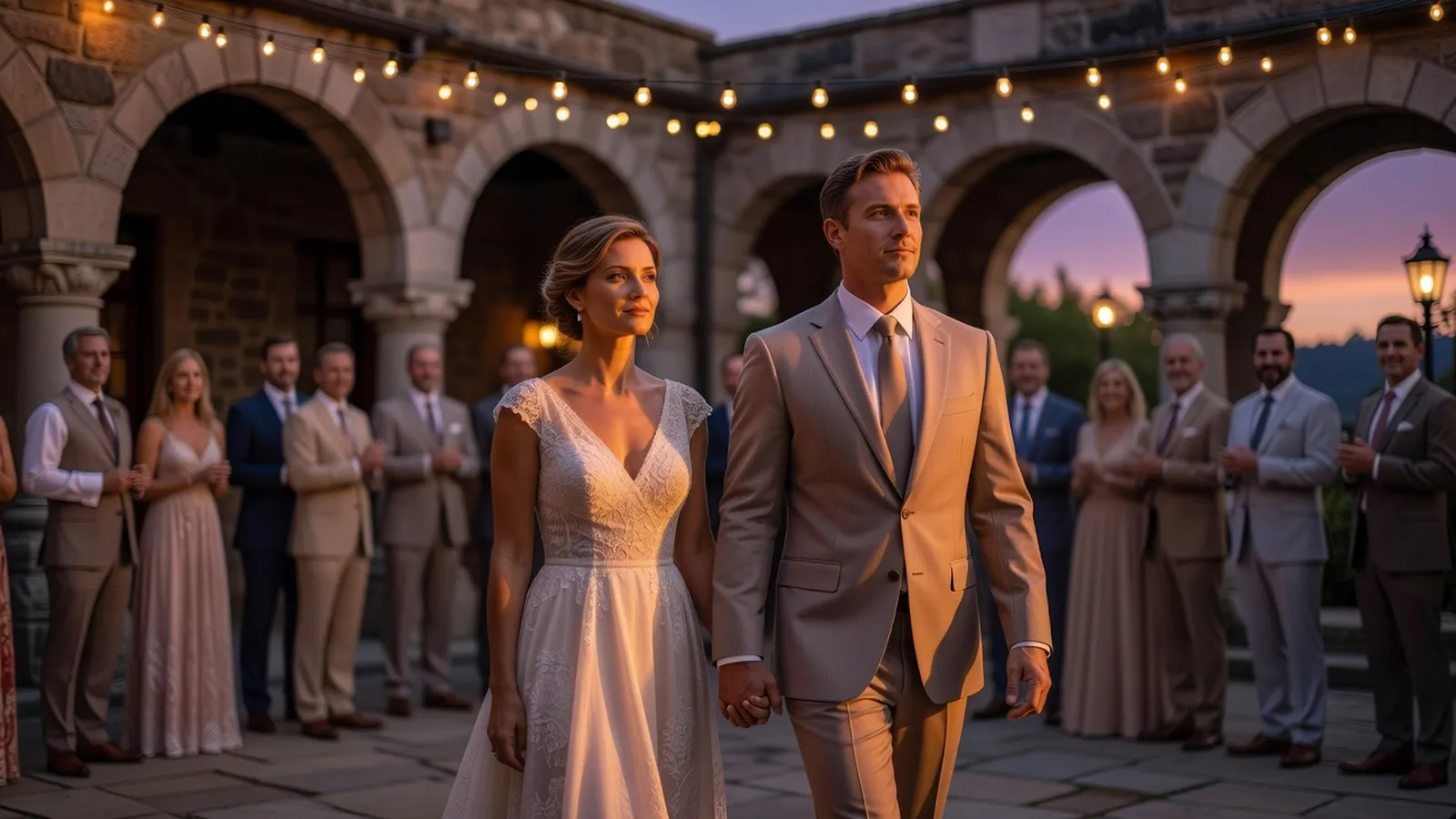
Ontario sets very few rules about where a wedding takes place. The law asks for a valid licence, an authorized officiant and at least two witnesses, so the real choice is practical: a banquet hall, an estate, an urban space, a city park with a permit, or a civil ceremony room run by the City of Toronto. Compare them on five criteria: capacity, alcohol permit, accessibility, season and a plan B.
Verified on November 27, 2026.
What the law asks of a wedding, and what it leaves open
Before comparing rooms, it helps to know how little the province dictates about the place itself. According to the Government of Ontario's Getting married page, a wedding in Ontario requires a valid licence, an authorized officiant and at least two witnesses. The ceremony must take place within 3 months of the date the licence is issued. No particular form of ceremony is imposed, and the page does not give a precise venue rule for a civil or religious officiant. The one case it singles out is a judge, who performs the ceremony in their office. Marriages are then registered through ServiceOntario.
That openness is what makes the venue decision feel so large. A couple can marry in a hall, a garden or a city room, as long as the officiant is willing and the owner of the space agrees. The limits come from the space (what it allows, how many people it holds, what it requires of you) and from the permits that apply to the activities around the ceremony, such as alcohol or a park booking.
The officiant matters here too. The Government of Ontario recognizes two categories: registered religious officiants, and civil officiants, who are a municipal clerk or authorized delegate, a judge, an associate judge or a justice of the peace. The list of registered officiants is published as open data in the registered marriage officiants dataset. If you want a ceremony outside a civil office, your officiant needs to be available at the same place and time as your venue, so check both before paying a deposit on either.
For couples who are marrying across borders or inviting guests from abroad, the paperwork has its own timeline. Our guide to getting married in Canada with a foreign spouse covers licence, documents and recognition, and our planner interview on guests from abroad looks at how that plays out when a venue is already booked.
The five types of wedding space, compared
Ontario wedding spaces fall into five broad families. None is better than another in general; each answers a different set of needs. This table gives a first pass, using only qualitative points, because capacity, availability and pricing are specific to each venue and must come from the venue itself.
| Type of space | Typically used for | Strong points | What to check first |
|---|---|---|---|
| Banquet hall or reception hall | Ceremony and reception in one place | One address, one contact, a room designed for a seated meal | Whether the hall holds its own liquor licence; how the room is split between ceremony and dinner |
| Estate or country property | Ceremony, reception, sometimes lodging | Setting, grounds, room for photographs | Weather plan, access for guests and suppliers, what the property allows outdoors |
| Urban space (loft, gallery, restaurant, event room) | Reception, sometimes ceremony | Central location, character, easy for guests without cars | Sound limits, access to the room, whether you bring your own caterer |
| City park with a permit | Ceremony and photographs | Open setting, simple structure | Permit approval, maximum occupancy of the chosen spot, alcohol rules |
| City of Toronto civil ceremony room | Short, non-religious ceremony | Official setting, tied to the City's licence service | Appointment availability, 30-minute format, separate licence appointment |
Source: Government of Ontario, Getting married; City of Toronto, Civil weddings and Wedding ceremonies in parks; AGCO, Special Occasion Permit guide. Qualitative comparison by the editorial team.
Many weddings combine two of these. A short civil ceremony at the City, followed by a dinner in a reception hall, is a common pattern because it separates the legal moment from the party. A park ceremony followed by an indoor reception gives you the outdoor photographs and a dry fallback for the meal. Read the table as a set of building blocks rather than a menu where you must pick one line.
Banquet halls and reception halls
A reception hall is built for one thing: seating a group, feeding it and moving through a programme of speeches, dinner and dancing. For couples who want fewer moving parts, that is the appeal. The hall usually handles the room layout, the kitchen or caterer arrangements and the flow of the evening, and a single coordinator often becomes your point of contact.
The questions to ask are about flexibility. Can the ceremony happen in the same room as the dinner, and how long does the turnaround take? Does the hall impose a set caterer or allow an outside one? What are the rules for music, decorations and an outside photographer? A hall that suits a traditional seated dinner may feel rigid if you want a long cocktail hour or a cultural programme with several parts.
Alcohol is the other early question. A hall that holds its own liquor licence handles service on its own terms. If it does not, the AGCO's Special Occasion Permit guide explains that a venue without a permit needs a Special Occasion Permit for the event, that a private event is limited to invited guests and that the application should be made at least 10 days ahead. Ask the hall directly which situation applies, in writing, and keep the answer with your contract. The same logic applies to every venue type in this article, and our checklist for renting a private event space in Ontario walks through those questions in the order they tend to matter.
Estates and country properties
An estate or country property offers grounds, a sense of occasion and often a single booking that covers ceremony, photographs and reception. For couples who want a day that feels set apart from ordinary city life, this is where the search often begins.
The trade-off is logistics. A property outside a city centre means guests need to get there, and the route back at the end of the night deserves as much thought as the route in. Ask how guests will travel, whether the property can host people overnight, and how suppliers load in and out. Ask also what the property allows on its grounds: amplified music, open flames, tents, outside vendors and the hours the evening may run.
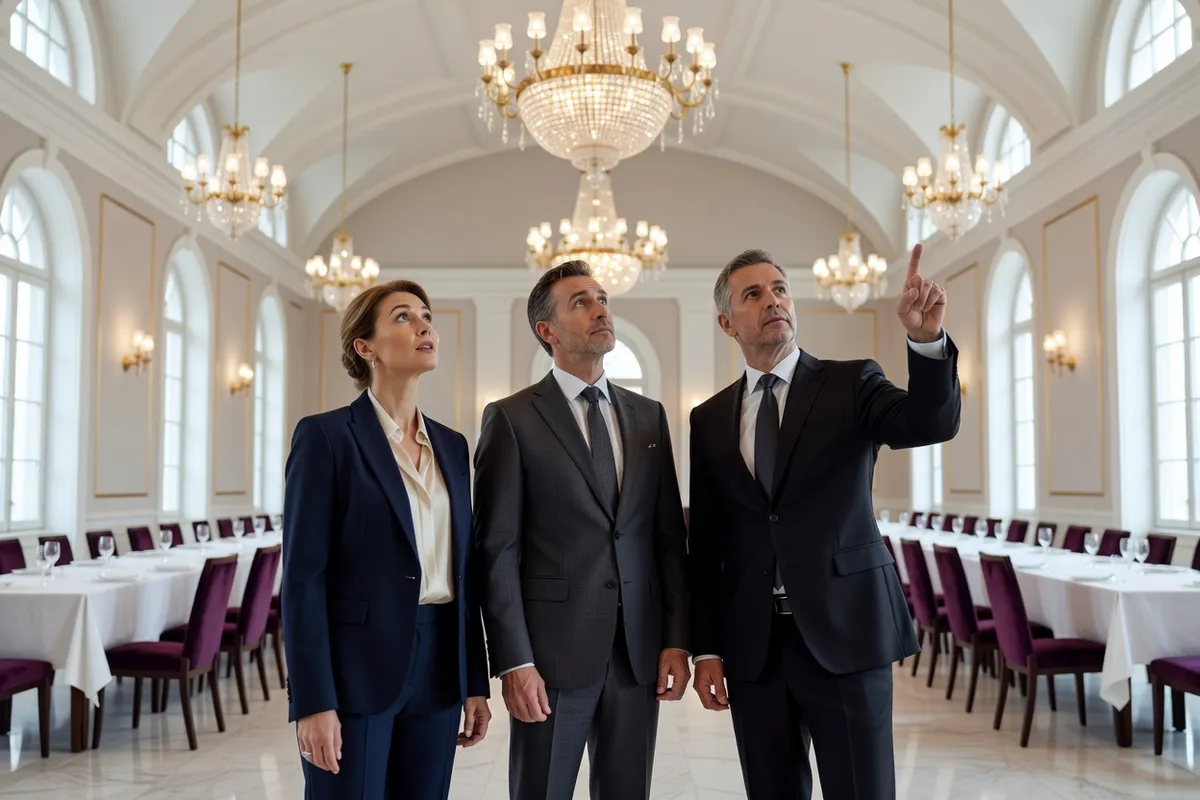
Weather deserves its own paragraph. Ontario's seasons change what an outdoor setting can offer, and a property that looks ideal in its summer photographs may behave very differently on a cold or wet day. Ask to see the indoor fallback in person, and ask who decides to move indoors, how far ahead and until what time. A venue that treats the plan B as an afterthought is telling you something. Our guide to wedding planning in Canada places these choices in the wider frame of the Canadian wedding process.
Urban venues: lofts, galleries, restaurants and event rooms
City spaces appeal to couples whose guests are scattered or mostly travel without cars. Central rooms are easy to reach by transit and often sit close to hotels, which simplifies out-of-town guests' weekend. They also tend to have a distinct character, which can reduce the amount of decoration you need.
The same character brings practical limits. Older buildings and converted spaces vary a great deal in how guests and suppliers get inside, whether there is a lift, how the washrooms are arranged and how late sound may continue. A room that looks open in a photograph may be divided by columns or stairs. Ask for a walk-through, and walk it as your oldest and youngest guest would.
Catering is another variable. Some urban spaces include food service; others are a blank room where you bring a caterer, rentals and staff. Neither is wrong, but the second asks you to coordinate more people, and a venue that is "flexible" on paper can turn out to be the most work. If you are weighing a restaurant or event room, the question is the same as for a banquet hall: who holds the liquor licence for the night, and under which conditions?
For couples whose celebration is smaller, an urban room can be easier to fill than a large hall, which can feel empty when the guest list is modest. That is a qualitative point only: ask each venue what size of group the room is designed to host, and treat its answer as the starting figure.
City parks: permit, approval and limits
A ceremony in a Toronto park can be a modest, open-air option. The City of Toronto's page on weddings and photography in parks states that a wedding ceremony in a city park requires a permit, and that the permit is subject to approval by the park supervisor. In other words, you cannot simply turn up with guests and chairs.
Different locations have different limits. The City's page names, for example, Ashbridge's Bay, Edwards Gardens and the Allan Gardens Conservatory, and each of them has its own maximum occupancy. That matters when you compare options: a spot that looks right for a small ceremony may not suit a larger group, and the figure for your chosen location must come from the City, not from a venue brochure or a friend's memory.
A park permit covers the ceremony, not the reception. The City is explicit that alcohol is an AGCO matter, not a City one. If you plan to serve drinks, that is a separate conversation, and it should happen before you commit to the park. Many couples treat the park as the ceremony and photograph location, then move to an indoor space for the meal. That pairing also solves the plan B problem, since the indoor venue can take over if the weather turns.
Finally, remember that a park is a public place. Other visitors may be nearby, access for guests with mobility needs depends on the specific spot, and you will be working with the park's rules rather than your own. Visit at the time of day you intend to marry before you apply.
If you are weighing Ontario against another city in the region, it can help to see how a different market is organized. This guide to comparing wedding and event venues in Ottawa sorts spaces by type and price drivers in the same spirit, which makes the criteria below easier to test against a second set of options.
The City of Toronto civil ceremony
For couples who want a short, official ceremony without a rented room, the City of Toronto offers civil weddings. According to the City's civil weddings page, ceremonies last 30 minutes, are non-religious and take place by appointment at the old City Hall (60 Queen Street West) and at the North York Civic Centre. The current rates are published by the City, so check that page rather than relying on a figure from another source.
Two details trip people up. First, the licence is requested separately from the ceremony. The City's page on applying for a marriage licence explains that licences are issued by appointment at City Hall (100 Queen Street West) or at the North York Civic Centre, and that the appointment is for the licence only; the ceremony is arranged on its own. Second, the 3-month window from the Government of Ontario applies: the ceremony must take place within 3 months of the licence being issued, so the two bookings need to line up.
A City ceremony pairs well with a reception elsewhere. Some couples hold the civil ceremony on a weekday with two witnesses and a few close family members, then celebrate with a larger gathering later in a hall or urban space. That arrangement takes pressure off the venue, which no longer has to host a legal ceremony and can focus on the dinner. Because no particular form of ceremony is imposed in Ontario, the arrangement is entirely your call.
Five criteria to compare any venue
Once you have narrowed the type, compare candidates on the same five criteria. Using the same list for every venue keeps the decision honest, because a polished showing is easy to confuse with a good fit.
- Capacity. Ask for the figure the venue is designed for, in writing, and ask how it changes between a seated dinner, a standing reception and a ceremony with rows of chairs. For a park, take the maximum occupancy from the City. This guide gives no capacity figures, because they belong to each venue.
- Alcohol permit. Does the venue hold its own liquor licence, or will you need a Special Occasion Permit? If the latter, remember the AGCO's requirement of an application at least 10 days ahead, and the limit of a private event to invited guests. Ask who submits the application and who is responsible on the night.
- Accessibility. Look at the route from the entrance to the ceremony space, to the dining room and to the washrooms. Ask about stairs, lifts, ramps and parking or drop-off, and ask suppliers how they will load in. Walk the route yourself.
- Season. Visit, or ask for photographs, in the season you plan to marry. Light, temperature, access and the state of the grounds change with the calendar, and so does the availability of popular dates.
- Plan B. For anything outdoors or partly outdoors, ask what happens in bad weather, who decides, how late the decision can be made and where guests will go. For a park ceremony, ask what the indoor alternative is before you apply for the permit.
A venue that answers all five clearly, without hurrying you, is usually one that has hosted weddings before and understands what couples need. If an answer is vague, ask for it in writing; a good venue will not mind.
Comparing offers side by side
When two or three venues remain, put them in a simple grid of your own. One row per criterion, one column per venue, and a line for what is included in the booking. Then add the items that are easy to forget:
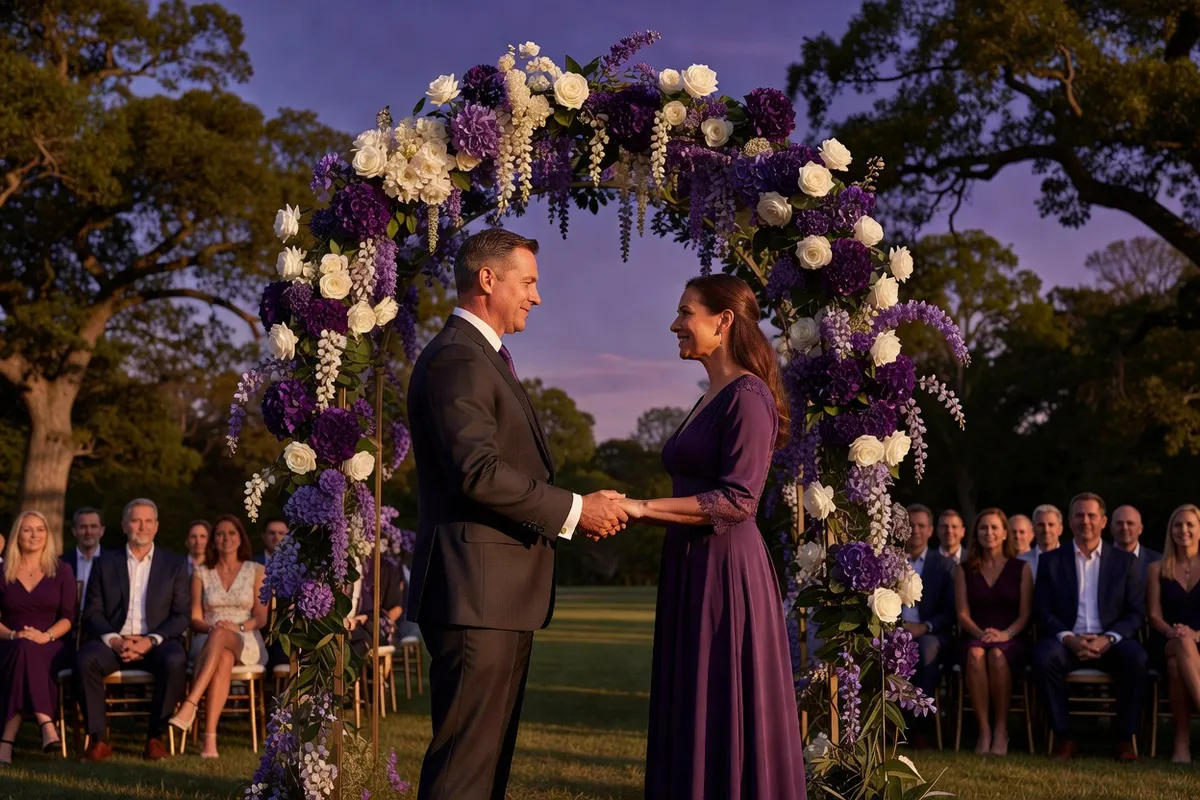
- The hours of access, including setup and cleanup time.
- Whether an outside caterer, photographer, DJ or band is allowed.
- Who holds the liquor licence, or who will apply for the Special Occasion Permit.
- The cancellation and rescheduling terms, and what happens to a deposit if the date moves.
- The insurance requirements, if any.
- The sound and curfew limits.
- The fallback space in bad weather.
None of these items requires a figure from this guide. They are questions, and the venue's written answers are your evidence. Keep every reply in one folder, and compare the answers rather than the impressions.
It also helps to separate the legal timeline from the venue timeline. The licence has to be used within 3 months of issue, the officiant has to be available, and the Special Occasion Permit, if you need one, has to be requested at least 10 days ahead. Counting backward from the wedding date to each of those deadlines tells you when a decision can no longer wait. If the celebration also includes a corporate-style event, such as a rehearsal dinner for a large group, our piece on planning an office holiday party in Toronto shows how venue types are weighed for group gatherings, which is a useful parallel.
Mistakes to avoid
A few errors come up often enough to name.
Treating the venue as the whole decision. The place matters, but the officiant, the licence and the witnesses are what make the marriage legal. A venue booked without checking the officiant's availability can leave you with a lovely room and no ceremony.
Assuming a venue includes alcohol service. Confirm in writing who holds the licence. If you need a Special Occasion Permit, the AGCO's lead time is not something to leave to the last fortnight.
Skipping the walk-through. Photographs flatter. Visit at the time of day and in the season you intend to use, and bring someone who will notice what you do not.
Ignoring the plan B. The more outdoor your plan, the more the fallback matters. Ask for it before signing, not after.
Relying on memory for rules. Rules and fees change. Treat this guide as an overview, and check the City, the AGCO and the Government of Ontario pages directly before you commit.
Frequently asked questions
Do I need a special venue to get legally married in Ontario? No particular form of ceremony is required, and the Government of Ontario does not set a precise venue rule for a civil or religious officiant (a judge performing the ceremony in their office is the exception). What the law does require is a valid licence, an authorized officiant and at least two witnesses.
How long is a marriage licence valid in Ontario? According to the Government of Ontario, the ceremony must take place within 3 months of the date the licence is issued. Plan your venue date so that it falls inside that window, and confirm the current rule on the official page before you book.
Can I hold a wedding ceremony in a Toronto park? Yes, with a permit. The City of Toronto says a ceremony in a city park requires a permit approved by the park supervisor, and each location has its own maximum occupancy. Alcohol is not a City matter: it falls under the AGCO.
Does a wedding venue need a liquor licence? A venue that does not hold its own liquor licence needs a Special Occasion Permit for the event. The AGCO says a private event is limited to invited guests and that the application should be made at least 10 days in advance. Ask every venue which situation applies to you.
Can the City of Toronto host the ceremony itself? Yes. The City offers non-religious civil ceremonies of 30 minutes, by appointment, at the old City Hall (60 Queen Street West) and at the North York Civic Centre. The marriage licence is requested separately, and the current rates are on the City's page.
General information only. It does not replace advice from a lawyer or legal adviser; rules change, so check with the organization cited.
The King West Journal editorial team
Frequently asked questions
Do I need a special venue to get legally married in Ontario?
No particular form of ceremony is required, and the Government of Ontario does not set a precise venue rule for a civil or religious officiant (a judge performing the ceremony in their office is the exception). What the law does require is a valid licence, an authorized officiant and at least two witnesses.
How long is a marriage licence valid in Ontario?
According to the Government of Ontario, the ceremony must take place within 3 months of the date the licence is issued. Plan your venue date so that it falls inside that window, and confirm the current rule on the official page before you book.
Can I hold a wedding ceremony in a Toronto park?
Yes, with a permit. The City of Toronto says a ceremony in a city park requires a permit approved by the park supervisor, and each location has its own maximum occupancy. Alcohol is not a City matter: it falls under the AGCO.
Does a wedding venue need a liquor licence?
A venue that does not hold its own liquor licence needs a Special Occasion Permit for the event. The AGCO says a private event is limited to invited guests and that the application should be made at least 10 days in advance. Ask every venue which situation applies to you.
Can the City of Toronto host the ceremony itself?
Yes. The City offers non-religious civil ceremonies of 30 minutes, by appointment, at the old City Hall (60 Queen Street West) and at the North York Civic Centre. The marriage licence is requested separately, and the current rates are on the City's page.
Sources
Verified on
- Government of Ontario, Getting married, Government of Ontario, 2026.
- Government of Ontario, Registered marriage officiants, Government of Ontario, 2026.
- City of Toronto, Civil weddings, City of Toronto, 2026.
- City of Toronto, Applying for a marriage licence, City of Toronto, 2026.
- City of Toronto, Wedding ceremonies and commercial photography in parks, City of Toronto, 2026.
- Alcohol and Gaming Commission of Ontario, Special Occasion Permit guide, AGCO, 2026.